Web cookies (also called HTTP cookies, browser cookies, or simply cookies) are small pieces of data that websites store on your device (computer, phone, etc.) through your web browser. They are used to remember information about you and your interactions with the site.
Purpose of Cookies:
Session Management:
Keeping you logged in
Remembering items in a shopping cart
Saving language or theme preferences
Personalization:
Tailoring content or ads based on your previous activity
Tracking & Analytics:
Monitoring browsing behavior for analytics or marketing purposes
Types of Cookies:
Session Cookies:
Temporary; deleted when you close your browser
Used for things like keeping you logged in during a single session
Persistent Cookies:
Stored on your device until they expire or are manually deleted
Used for remembering login credentials, settings, etc.
First-Party Cookies:
Set by the website you're visiting directly
Third-Party Cookies:
Set by other domains (usually advertisers) embedded in the website
Commonly used for tracking across multiple sites
Authentication cookies are a special type of web cookie used to identify and verify a user after they log in to a website or web application.
What They Do:
Once you log in to a site, the server creates an authentication cookie and sends it to your browser. This cookie:
Proves to the website that you're logged in
Prevents you from having to log in again on every page you visit
Can persist across sessions if you select "Remember me"
What's Inside an Authentication Cookie?
Typically, it contains:
A unique session ID (not your actual password)
Optional metadata (e.g., expiration time, security flags)
Analytics cookies are cookies used to collect data about how visitors interact with a website. Their primary purpose is to help website owners understand and improve user experience by analyzing things like:
How users navigate the site
Which pages are most/least visited
How long users stay on each page
What device, browser, or location the user is from
What They Track:
Some examples of data analytics cookies may collect:
Page views and time spent on pages
Click paths (how users move from page to page)
Bounce rate (users who leave without interacting)
User demographics (location, language, device)
Referring websites (how users arrived at the site)
Here’s how you can disable cookies in common browsers:
1. Google Chrome
Open Chrome and click the three vertical dots in the top-right corner.
Go to Settings > Privacy and security > Cookies and other site data.
Choose your preferred option:
Block all cookies (not recommended, can break most websites).
Block third-party cookies (can block ads and tracking cookies).
2. Mozilla Firefox
Open Firefox and click the three horizontal lines in the top-right corner.
Go to Settings > Privacy & Security.
Under the Enhanced Tracking Protection section, choose Strict to block most cookies or Custom to manually choose which cookies to block.
3. Safari
Open Safari and click Safari in the top-left corner of the screen.
Go to Preferences > Privacy.
Check Block all cookies to stop all cookies, or select options to block third-party cookies.
4. Microsoft Edge
Open Edge and click the three horizontal dots in the top-right corner.
Go to Settings > Privacy, search, and services > Cookies and site permissions.
Select your cookie settings from there, including blocking all cookies or blocking third-party cookies.
5. On Mobile (iOS/Android)
For Safari on iOS: Go to Settings > Safari > Privacy & Security > Block All Cookies.
For Chrome on Android: Open the app, tap the three dots, go to Settings > Privacy and security > Cookies.
Be Aware:
Disabling cookies can make your online experience more difficult. Some websites may not load properly, or you may be logged out frequently. Also, certain features may not work as expected.
Congratulations to George Bollas who has been selected as a Fulbright Scholar Alumni Ambassador!
The Fulbright Program was established in 1946 as a bold investment in global peace and American prosperity through educational and cultural exchange. Itoffers passionate and accomplished students and scholars in more than 160 countries the opportunity to study, teach, conduct research, exchange ideas, and contribute to mutual understanding. During the 2024-2025 year, Prof. Bollas conducted research in Greece as a Fulbright U.S. Scholar at the Chemical Process and Energy Resources Institute of the Centre for Research and Technology Hellas, examining ammonia as a hydrogen carrier for decarbonizing transportation and industry.
In this new role, Bollas is joining a competitive national cohort of scholars chosen to represent and promote the prestigious Fulbright program where he will serve a two-year term sharing his Fulbright experience, mentoring prospective applicants, and advancing international academic collaboration across his professional networks. The role also includes conference engagement, campus visits, advocacy efforts, digital outreach, and collaboration with the U.S. Department of State’s Bureau of Educational and Cultural Affairs.
Warmest congratulations to Professors Luyi Sun, Kelly Burke, Desen Özkan, and Yongku Cho, who have been awarded endowed and term professorship appointments, honoring their outstanding achievements in research, teaching, innovation, and service. Professor Luyi Sun and Kelly Burke are appointed as Centennial Professors, Prof. Desen Özkan is appointed as Collins Aerospace Term Professor, and Prof. Yongku Cho is appointed as Castleman Term Professor.
Endowed and term professorships represent one of the highest recognitions a faculty member can receive. These appointments recognize faculty whose work is advancing engineering knowledge, educating future generations of engineers, and driving innovations that extend far beyond the University. Through groundbreaking research, industry partnerships, technology development, and student mentorship, our chemical engineering faculty are helping address some of society’s most pressing challenges while strengthening UConn Engineering’s reputation as a leader in research and innovation.
We congratulate all our chemical engineering faculty who carry endowed and term professorships and look forward to their continued contributions to research, education, innovation, and the broader engineering community.
Congratulations to our alumni Ethan Perkins on being named a Fulbright U.S. Student Program finalist!
The Fulbright Program was established in 1946 as a bold investment in global peace and American prosperity through educational and cultural exchange. It offers passionate and accomplished students and scholars in more than 160 countries the opportunity to study, teach, conduct research, exchange ideas, and contribute to mutual understanding.
Under the Fulbright program, Ethan will be looking to better understand how certain materials affect the performance of an electrochemical catalyst used in water electrolysis. He will be working with Livia Giordano, a professor at the University of Milano-Biccoca and performing density functional theory calculations of different systems.
Since 1946, the Fulbright Program has provided nearly 450,000 students, scholars, scientists, professionals, teachers, and artists with life-changing opportunities. We are proud to see Ethan be part of this prestigious program and look forward to seeing his continued success throughout his career.
We are pleased to share that Cato T. Laurencin has been elected an International Fellow of the Chinese Society for Biomaterials. This distinction recognizes internationally respected leaders whose work has made sustained and significant contributions to biomaterials science and engineering.
This honor reflects his continued impact in regenerative engineering, biomaterials research, and clinical translation. His work has helped shape the global direction of the field, advancing interdisciplinary collaboration and innovation at the interface of engineering and medicine.
We congratulate Professor Laurencin on this international recognition and look forward to his continued leadership in advancing biomaterials research worldwide.
The Connecticut Advanced Pavement Laboratory is excited to share its research space with SURF Grant Awardee Kathryn Ausere ’28 (Chemical Engineering) this summer (2026). During the academic break Summer Undergraduate Research Funds (SURF) support full-time undergraduate students conducting summer research projects. Kathryn’s research will be:Evaluating the Effectiveness of Three Types of Tack Coats at Reducing Tracking Under Various Humidity Conditions.
We are proud to celebrate our Ph.D. student,Md Delowar Hossain, on receiving the 2026 International Student Leadership Award at the University of Connecticut! As President of the Graduate Students Association of Bangladesh (GSAB), Delowar has demonstrated exceptional leadership in fostering community, inclusion, and support for international students across campus. Through his efforts, GSAB has become a network connecting current students, incoming students, alumni, and the broader international community. From helping students navigate housing, transportation, research guidance, and daily life transitions to creating spaces for cultural exchange and professional connection, Delowar’s leadership has made a lasting impact at UConn. His dedication to building an environment of belonging, mutual support, and cultural understanding reflects the very best of our department and university values. Congratulations, Delowar, on this well-deserved recognition.
With the semester coming to a close, our senior design teams presented their projects to judges during the College of Engineering Senior Design Demonstration Day—and what a celebration it was. We are proud to recognize the top-placing teams and the outstanding work our students brought to the final stretch of their undergraduate journey.
🥇 1st Place Team 9 - Using Computational Modeling to Study Paclitaxel Diffusion from Hydrogel Disks into Lung Tissue
👥 Members: Shantel Porter, Praise Udom, and Alexis West
🏢 Sponsor: Medtronic
🎓Faculty Advisor: Mu-Ping Nieh 🔗Watch the video presentation on the College of Engineering Senior Design Website.
🥈 2nd Place Team 5 - Synthesizing Catalyst Nanofibers for Hydrogen Electrolyzers
👥 Members: Mehr Chhatre, Martina Jagielski, and Kinée Christian
🏢 Sponsor: Nel Hydrogen
🎓Faculty Advisor: Jeffrey McCutcheon 🔗Watch the video presentation on the College of Engineering Senior Design Website.
🥉 3rd Place Team 11 - Acceleration of Molten Carbonate Fuel Cell Conditioning Process
👥 Members: Julia Steiner, Megan Begley, Ryan Downey, and William Watson
🏢 Sponsor: Fuel Cell Energy
🎓Faculty Advisor: Xiao-Dong Zhou 🔗Watch the video presentation on the College of Engineering Senior Design Website.
A huge thank you to our industry sponsors and faculty advisors for their mentorship throughout the year, and to our judges for their time and expertise. Congratulations to all of our seniors on completing this milestone!
Congratulations to Maryam Mohebi on being named the departmental winner at the 12th Annual UConn College of Engineering Poster Competition.
This event brought together graduate students from across the College of Engineering to showcase their research, highlighting the depth, innovation, and impact of their work. Maryam was also selected for the People’s Choice Award, reflecting both the quality of her research and her ability to communicate it effectively. Her work on Porous Liquid Crystalline Polymer Scaffolds for 3D Cell Culture, conducted under the guidance of Prof. Kelly Burke, was a standout among the presentations.
Organized by the College of Engineering Graduate Programs Office, the competition provides a valuable platform for students to present complex ideas in an accessible format while strengthening their professional communication skills. Participants shared their work with judges and attendees from academia and industry.
We congratulate Maryam on this recognition and look forward to seeing where her future research leads.
Professor Sir Cato T. Laurencin, MD, Ph.D., K.C.S.L., has been ranked number 1 in the U.S. in the Orthopaedic Surgery category for 2025 by ScholarGPS over the past 5 years! ScholarGPS ranks scholars based upon a rigorous quantitative assessment of contributions across multiple scientific layers. He is also ranked number 8 in the world.
Dr. Laurencin is the first to receive 4 of the principal honors in orthopaedic surgery in the U.S. He received the American Orthopaedic Association (AOA) Distinguished Contributions to Orthopaedics Award with induction into the AOA Awards Hall of Fame, the Nicolas Andry Lifetime Achievement Award from the Association of Bone and Joint Surgeons, the Kappa Delta Award from the American Academy of Orthopaedic Surgeons and the Marshall Urist Award from the Orthopaedic Research Society. He is also the first surgeon in history elected to all four of the U.S. national academies. He is also the first surgeon elected to all four U.S. national academies—the National Academy of Sciences, the National Academy of Engineering, the National Academy of Medicine, and the National Academy of Inventors.
We congratulate Dr. Laurencin on this remarkable recognition and celebrate the continued impact of his work.
Congratulations to our PhD students,Azeem SarwarandMuhammad Faheem Hassan, for receiving the Clean Energy and Sustainability Innovation Program (CESIP) Award presented byUniversity of ConnecticutandEversource Energy! Together with their teammateMaham Liaqatfrom theUConn ChemistryDepartment, the team presented “Wastewater to Bioenergy: Integrated Chlorella Cultivation and Pyrolysis” at the North American Power Symposium (NAPS) this past fall. Their project integrates wastewater treatment with microalgae cultivation and thermochemical conversion, demonstrating a systems-level approach to bioenergy production. The CESIP challenge brings together interdisciplinary student teams to address urgent energy and environmental challenges, and this recognition reflects both the technical rigor and collaborative strength of their work. We are proud of their accomplishment and looking forward to seeing this work continue to evolve. Read more on UConn Today.
Warmest congratulations to our fourth-year Ph.D. candidateGuilherme Pereira de Souza Del Rio Bertolaon receiving one of two 2025NERPG; New England Rubber & Plastics GroupScholarships! The NERPG, a division of theAmerican Chemical Society, supports knowledge exchange among chemists, engineers, and professionals working in rubber and plastics chemistry and engineering. This prestigious scholarship recognizes Guilherme’s innovative research, conducted under the supervision of ProfessorAnson Ma, on simulating the microwave curing of fully compounded 3D-printed elastomers—advancing rapid prototyping and scalable manufacturing of customized, stretchable components used in medical devices, automotive systems, and consumer products. We are excited to see the future achievements that await him.
Congratulations to Sir Dr. Cato Laurencin on receiving the Bioactive Materials Lifetime Achievement Award, recognizing his pioneering contributions to biomaterials, regenerative engineering, and translational medicine.
Established in 2020, the Bioactive Materials Lifetime Achievement Award honors excellence in research and development while serving as a catalyst for advancing the field, fostering international collaboration, and inspiring innovation.
Dr. Laurencin’s visionary work has defined the field of regenerative engineering, bridging engineering, biology, and medicine to create transformative clinical solutions. At UConn, he holds joint appointments in Orthopedic Surgery, Chemical & Biomolecular Engineering, Materials Science & Engineering, and Biomedical Engineering.
Widely recognized as the founder and pioneer of regenerative engineering, Dr. Laurencin is an expert in biomaterials science, stem cell technology, and nanotechnology, and was named one of the 100 Engineers of the Modern Era by the American Institute of Chemical Engineers.
Read more about this well-deserved recognition on UConn Today.
Congratulations to Dan Burkey and Monika Crowl on being awarded a $750K NSF grant through the Improving Undergraduate STEM Education (IUSE) program!
Dan Burkey, Castleman Term Professor of Engineering Innovation and Associate Dean for Undergraduate Education, will lead this multi-institutional project. He is joined by Monika Crowl, Assistant Professor-in-Residence from our department, along with Mike Young, Associate Professor Emeritus from Neag School of Education, and partners from the University of Pittsburgh and Rowan University.
The team aims to create a fun and engaging way for engineering students to learn about professional ethical decision making, preparing the next generation of engineers for the challenges of modern practice.
We are proud to celebrate Dan and Monika’s leadership and contributions to this transformative initiative!
Warmest congratulations to ProfessorBurcu Beykalfor being awarded one of only twoEversource EnergyProfessorships in Environmental and Sustainability Education atUniversity of Connecticut! This prestigious professorship recognizes outstanding scholarly achievements of early-career faculty who exemplify research excellence in their fields. The two recipients were recently selected and honored byUConn College of EngineeringDeanJC ZhaoandUConn Tech ParkDirector,Eversource EnergyEndowed Chair in Environmental Engineering, Emmanouil Anagnostou.
As a process systems engineer, Prof. Beykal’s research integrates artificial intelligence, machine learning, and mathematical optimization to develop solutions for global water and critical mineral shortages. Her impressive track record includes 30 peer-reviewed publications—18 of which were published at UConn—11 invited talks, and over $2.5M in federal research funding.
Congratulations, Prof. Beykal! This recognition is well deserved!
Congratulations to Professor Sir Cato T. Laurencin, MD, PhD, KCSL, on receiving the 2025 Springer Nature Editor of Distinction Award! This prestigious honor recognizes editors who embody scientific excellence, integrity, and leadership in advancing discovery. Prof. Sir Cato’s dedication to rigorous scholarship and impactful science continues to inspire our community. Read more on UConn Today.
Warmest congratulations to Professor Luyi Sun on being named a 2025 Board of Trustees Distinguished Professor—one of the highest honors UConn confers in recognition of sustained excellence in research, teaching, and service!
Prof. Sun leads an internationally recognized research program in nanostructured hybrid materials for functional, environmental, and energy-related applications. With over 310 peer-reviewed journal articles, his contributions to materials science have been widely impactful. He is a Fellow of the National Academy of Inventors, the Royal Society of Chemistry, and the Society of Plastics Engineers. His work has also been recognized with prestigious honors including the Morand Lambla Award from the Polymer Processing Society and election to the Connecticut Academy of Science and Engineering.
This award is a testament to Prof. Sun’s continued leadership, innovation, and dedication to advancing science and education. Read more on Prof. Sun’s achievements on UConn Today.
Professor Sir Cato T. Laurencin, MD, PhD, KCSL, was recently honored by the West Indian Foundation at their Board of Directors Reception for his outstanding contributions to the community! A University Professor at UConn and internationally recognized leader in regenerative engineering, Professor Sir Laurencin continues to inspire through his groundbreaking research, commitment to equity, and unwavering dedication to mentorship and public service. We are proud to celebrate this well-deserved recognition of a truly impactful scholar and community leader.
Congratulations to our graduate students who received the 2025 Travel Awards:
Nicole Beauregard Marina Dabaghian Dimitri Alston Hasan Nikkhah Adrian Irhamna Kayla Smith Maryam Mohebbi Deniz Ipekci Salman Ahmadipouya Amir Shahbazi These awards support student travel to present research, attend conferences, and engage with the broader scientific community. We look forward to seeing the impact of your work at national and international venues!
Congratulations to our outstanding graduate students who received the 2025 Teaching Assistant Awards:
Joe Zavorskas Nia Samuels Kayla Smith This award recognizes exemplary contributions to teaching, student learning, and supporting our academic programs. Thank you for your impactful work in the classroom!
Congratulations to our outstanding graduate students who received the 2025 Research Excellence Awards:
Zahir Aghayev Nicole Beauregard Adrian Irhamna
This award recognizes exceptional research contributions—including impactful publications, conference presentations, patent applications, and entrepreneurial activities.
As part of the honor, recipients will present their work in our departmental seminar series this fall. We look forward to learning more about the exciting research driving their success!
Well-deserved congratulations to our incredible graduate students who received the CBE Service Awards last year:
Adaeze Maduako Nicole Beauregard Alanna Gado
From organizing Chemical Engineering Graduate Student Association events and running highly competitive department-wide March Madness bracket competitions, to preparing first-year students with mock qualifiers and serving on the board of the John Lof Leadership Academy, these students exemplify leadership, collaboration, and community-building in our department.
Thank you for your outstanding service and for making CBE a stronger, more connected place!
Congratulations to President Radenka Maric on being named a Fellow of The Electrochemical Society (ECS)—one of the highest honors in the field of electrochemistry and solid-state science!
Established in 1989, the ECS Fellowship recognizes individuals for their exceptional scientific contributions and active engagement in advancing the Society’s mission. Each year, no more than 15 distinguished members are selected worldwide for this prestigious title. President Maric is being recognized for her groundbreaking work in electrochemistry at surfaces and interfaces, and her leadership in developing nanomaterials for renewable energy and sensor technologies. She will be formally inducted at the 248th ECS Meeting in Chicago this October.
Read more on President Maric’s Journey on UConn Today.
Congratulations to Professor Xiao-Dong Zhou on his election to the Connecticut Academy of Science and Engineering (CASE)—a well-deserved honor recognizing his exceptional contributions to sustainable energy research!
As Director of UConn’s Center for Clean Energy Engineering, Dr. Zhou’s pioneering work continues to drive innovation in clean energy technologies, tackling some of today’s most urgent environmental challenges. He joins four other distinguished faculty members from the UConn College of Engineering in this prestigious recognition. We’re proud to see his impactful leadership celebrated at the state level and look forward to the continued influence of his work.
We’re thrilled to celebrate Dr. Cato T. Laurencin’s appointment as Knight Commander of the Order of St. Lucia — earning him the title Sir Cato Laurencin. This is one of the highest honors of St. Lucia and it’s a fitting tribute to a remarkable leader whose work in regenerative engineering and medicine has transformed lives around the world. From scientific innovation to mentoring the next generation, Sir Cato continues to inspire and uplift communities across disciplines and continents. Read more about this extraordinary achievement on UConn Today.
We are extremely proud of our junior, Caitlin Noonan ’26, for being named a Goldwater Scholar!
The Goldwater Scholarship is one of the most prestigious national scholarships for undergraduates in the natural sciences, engineering, and mathematics. Established by Congress to honor the late Sen. Barry M. Goldwater, the scholarship recognizes students with exceptional promise and encourages them to pursue research careers.
This year, Caitlin is one of only 441 students selected nationwide from a pool of over 5,000 applicants—a remarkable achievement!
Caitlin works with Prof. Julia Valla on converting UConn’s food waste into activated carbon adsorbents for carbon capture, sequestration, and use. This summer, she will continue her impactful work as a Summer Undergraduate Research Fund (SURF) awardee through UConn’s Office of Undergraduate Research. We can’t wait to see the incredible impact she’ll make in the future of science and engineering.
Congratulations to Professor Daniel Burkey on being recognized as the 2025 Outstanding Higher Education Professional by the UConn Neag School of Education and its Alumni Board!
Prof. Burkey currently serves as the Associate Dean for Undergraduate Education at the College of Engineering. With a background in chemical engineering and educational psychology, his work focuses on research methods and innovation in engineering education. He co-developed the College’s new Ph.D. program in Engineering Education and has led the way in introducing game-based teaching approaches at the undergraduate level.
Prof. Burkey holds a B.S.E. in Chemical Engineering from Lehigh University, an M.S. and Ph.D. in Chemical Engineering from MIT, and an M.A. in Educational Psychology from UConn. His outstanding contributions have been recognized through numerous honors, including the 2024 Provost’s Award for Excellence in Community Engaged Scholarship, the 2018 University Teaching Fellowship, and multiple honors as AIChE Chemical Engineering Educator of the Year (2011–2014, 2019).
Warmest congratulations to our graduate student, Deniz Ipekci, winning the 1st place in the department competition and 3rd place overall at the 11th Annual UConn College of Engineering Poster Competition! A special congratulations also goes to Akanksha Majumder, who won the People’s Choice Award!
Both students are advised by Prof. Jeffrey McCutcheon, and we are incredibly proud of their achievements. It was a fantastic event and wonderful to see our graduate students come together to present their exciting research. Their hard work and dedication continue to strengthen our department and the broader UConn engineering community.
We are extremely proud of our faculty who have been recognized as National Academy of Inventors (NAI) Fellows over the years for their groundbreaking contributions to science, technology, and innovation. Their research spans clean energy, sustainable materials, regenerative medicine, and nanotechnology, driving real-world impact through discovery and entrepreneurship.
President Radenka Maric (NAI Fellow, 2019) – A leader in sustainable energy, her pioneering work in materials and catalysts has advanced fuel cell technologies, energy storage, and electrochemical sensors, enabling high-performance clean energy solutions.
Prof. Cato Laurencin (NAI Fellow, 2013) – The first UConn faculty member to become an NAI Fellow and a trailblazer in regenerative engineering. His breakthroughs in nanotechnology, polymer chemistry, and tissue regeneration have earned him national honors, including the National Medal of Technology and Innovation.
Prof. Luyi Sun (NAI Fellow, 2021) – An expert in polymeric materials, ceramics, and composites, his research is driving innovation in packaging, energy, and catalysis, shaping next-generation materials for diverse applications.
These distinguished faculty members exemplify UConn’s commitment to cutting-edge research and transformative innovation. Congratulations to all!
Read more about all UConn College of Engineering NAI Fellows on UConn Today.
We are thrilled to share that our graduate student, Hasan Nikkhah, has received the Best Poster Award at the 2024 Foundations of Computer-Aided Process Design (FOCAPD) Conference for his work on seawater desalination. In collaboration with our undergraduate student Dev Barochia and under the guidance of Professor Burcu Beykal, Hasan presented their research, “Design and Optimization of a Multipurpose Zero Liquid Discharge Desalination Plant,” which introduces a novel approach to multicomponent seawater desalination with zero liquid discharge.
This work leverages mathematical optimization to determine the best operating conditions for minimizing energy consumption, addressing the environmental challenges of traditional desalination methods. By improving efficiency and sustainability, this work has the potential to make clean water production more accessible and environmentally friendly.
We are incredibly proud of Hasan’s achievement and look forward to seeing how this work contributes to the future of desalination!
Warmest congratulations to Professor Cato Laurencin, recipient of the 2025 Paul Terasaki Innovation Award! The Paul Terasaki Innovation Award honors individuals who have made outstanding and sustained contributions to biomedical innovation, recognizing those who not only advance research but also translate their discoveries into real-world medical solutions. Dr. Laurencin embodies this mission through his pioneering work in regenerative engineering, polymer science, and musculoskeletal repair and regeneration. His groundbreaking contributions include the invention of the Laurencin-Cooper ligament for regenerating the anterior cruciate ligament (ACL) and the development of engineered grafts for rotator cuff tendon repair and regeneration. His research has bridged fundamental science with transformative medical applications, impacting countless lives.
Dr. Laurencin’s recognition with the Paul Terasaki Innovation Award is a well-deserved honor, celebrating a legacy inspires the next generation of biomedical pioneers. He is also an elected member of the National Academy of Sciences, the National Academy of Engineering, and the National Academy of Medicine, as well as an elected fellow of the National Academy of Inventors. He is the first surgeon in history to be elected to all four of these prestigious academies.
We are proud to share that Professor Jeffrey McCutcheon has been awarded the AIChE FRI/Neil Yeoman Innovation Award by the AIChE Separations Division! This prestigious award recognizes Dr. McCutcheon’s pioneering research in additive manufacturing of thin film composite membranes, a significant advancement in membrane technology that has broad implications for separations science and industry. Dr. McCutcheon presented his groundbreaking work at the AIChE Annual Meeting Separations Division Plenary session last fall.
The FRI/Neil Yeoman Innovation Award honors individuals who have made outstanding contributions to separations technologies, with selection criteria including the development of transformative discoveries, creative research, or new processes/products that provide measurable commercial, environmental, or societal value.
We congratulate Dr. McCutcheon on this well-deserved recognition! His dedication and innovative research continue to shape the future of membrane separations while inspiring the next generation of engineers.
Congratulations to Professor Cato T. Laurencin on receivingSigma Xi’s highest honor, the Gold Key Award, at the International Forum on Research Excellence! The Gold Key Award is Sigma Xi’s highest distinction, presented to a member who has made extraordinary contributions to their profession and fostered critical innovations to enhance the health of the research enterprise, cultivate integrity in research, or promote public understanding of science—all with the goal of improving the human condition.
Dr. Laurencin’s pioneering work in regenerative engineering, biomaterials, and medicine has not only pushed scientific boundaries but also led to transformative advancements in healthcare. His leadership continues to inspire the next generation of researchers. Read more on UConn Today.
We are proud to celebrate the incredible achievements of our undergraduate students at this year’sAmerican Institute of Chemical Engineers (AIChE) Annual Student Conference.
Joseph Choi 🥈2nd Place – Computing, Simulation, and Process Control III Advisor: Prof.Matthew Stuber, PhD Poster Title: “Automatic Generation of Reduced-Space Models for Faster Global Optimization in Julia” Nathaniel Rodney 🥉3rd Place – Food, Pharmaceutical, and Biotechnology II Advisor: Wendy W.K. Mok (UConn Health) Poster Title: “Riboswitch Engineering: Tracking Levofloxacin Accumulation and Oxidative Damage in Single Cells Using Biosensors” Mehr Chhatre 🥉3rd Place – Environmental Science and Engineering I Advisor: Prof.Leslie Shor Poster Title: “Modulation of Hydrophobic Organic Contaminant Toxicity to Soil Protists via Co-Exposure with Microplastics” Special Recognition to All Our Student Presenters: Aislin Robb Advisor: Prof.Yongku Cho Poster Title: “Protein 14-3-3 Expression on Yeast Surface Display”
Sanjana Srinivas Advisor: Prof.Kelly Burke Poster Title: “Thiol-Functionalized Silk Biomaterials, a Study of Two Different Synthetic Routes” Katelynn Horvath Advisor: Prof.Yongku Cho Poster Title: “Engineering Binding Affinity of Yth to m6A-RNA Leveraging Yeast Surface Display and Next-Generation Sequencing for Comprehensive Mutant Library Analysis” Their hard work and commitment to research excellence continue to inspire us. Congratulations to all our students on their outstanding accomplishments!
Congratulations to our graduate student Erik Ammermann for winning the Food, Pharmaceutical, and Bioengineering Division Student Oral Presentation Award at the 2024 AIChE Annual Meeting!
Erik is a PhD student in our department working with Professor Yongku Cho to advance the understanding of tau phosphorylation in Alzheimer’s disease. Elevated levels of phosphorylated tau (p-tau) are linked to disease progression, but current methods to study these modifications are insufficient. Erik is tackling this challenge by developing a groundbreaking method to produce full-length human tau with genetically defined phosphoserine sites in engineered E. coli.
Well done, Erik! We’re excited to see what’s next.
The Water Research Foundation (WRF) has honored Professor Jeff McCutcheon with its top recognition: the Paul L. Busch Award. Dr. McCutcheon and his lab have developed a groundbreaking additive manufacturing approach to produce thin-film water treatment membranes. This method, based on electrohydrodynamic spray processing, enables customization of membrane chemistry and performance—capabilities that traditional manufacturing techniques cannot achieve.
The Paul L. Busch Award celebrates individuals conducting innovative research in water quality and the water environment, focusing on those who transform discoveries into practical solutions. Dr. McCutcheon’s work represents a bold step forward in addressing complex water contamination challenges through tailored, next-generation membrane technology.
Congratulations to ProfessorDan Burkeyon being elected as an American Institute of Chemical Engineers (AIChE) Fellow —AIChE’s highest grade of membership, achieved only through election by the AIChE Board of Directors. This prestigious recognition highlights Dr. Burkey’s long-term excellence in chemical engineering, impactful service to the profession, and dedication to advancing education and diversity. Over the years, Dr. Burkey has made remarkable contributions, including:
Research: Innovating in game-based education for process safety and engineering ethics, with 50+ publications and numerous awards, including the 2020 AIChE Education Division Innovation Award, the 2022 William H. Corcoran Award from the Chemical Engineering Division of theAmerican Society for Engineering Education(ASEE), and the 2023 David Himmelblau Award for Innovations in Computer-Based Chemical Engineering Education of theAIChE Computing & Systems Technology Division.
Education Leadership: GrowingUConn College of Engineeringenrollment to nearly 4,000 students, tripling female enrollment, and developing transformative programs like the Undergraduate Teaching, Mentoring, and Leadership Program and a new Ph.D. in Engineering Education.
Service: Spearheading theAIChE Education Division’s Future Faculty Mentoring Program, which has supported 200+ mentees and placed alumni in faculty roles at over 50 institutions worldwide.
Dr. Burkey’s leadership and commitment to engineering education have made a lasting impact on students, colleagues, and the chemical engineering profession. We are honored to celebrate this incredible achievement and thanking Dr. Burkey for his continued efforts to inspire and elevate the next generation of engineers. Read more on UConn Today.
Our alumniMichael Jones, has been named the recipient of the 2024 Scientific Achievement Award by theInternational System Safety Society(ISSS). This prestigious award recognizes individuals who have made significant contributions to system safety through research and development. Mike has been recognized for his work on the design and development of novel passive propagation resistant (PPR) lithium-ion (Li-ion) batteries, the integration of PPR Li-ion batteries with Unmanned Undersea Vehicles (UUVs), and integration of PPR Li-ion powered UUVs with U.S. submarine platforms. This award underscores the global impact of Mike’s work. Last year, the award went to a team of engineers at the Large Hadron Collider in Europe. This year, Mike is being honored as an individual, reflecting his substantial contributions to advancing system safety. Mike is currently pursuing a PhD in Chemical Engineering at theUniversity of Rhode Island(URI) while working as an Engineering Task Lead at theNaval Undersea Warfare Center Newport(NUWC). His research is supported by theOffice of Naval Research(ONR) and is part of theNational Institute for Undersea Vehicle Technology (NIUVT), a collaborative effort involving URI,University of Connecticut, the Navy, and other partners. We are incredibly proud of Mike and the contributions he continues to make in this field. His work is a powerful reminder of how knowledge and innovation can drive real-world impact.
We’re thrilled to announce that Dr. Yongku Cho and his collaborator Dr. Jesse Rinehart from Yale University School of Medicine have been awarded $500,000 at the Tauopathy Challenge Workshop to investigate post-translational modifications in tau protein aggregates. These chemical changes, found in patients with Progressive Supranuclear Palsy (PSP) and Frontotemporal Dementias (FTDs), may increase tau aggregation and toxicity, both of which are critical contributors to these neurodegenerative diseases.
Funded by the Rainwater Charitable Foundation, CurePSP, Alzheimer’s Association, and the Aging Mind Foundation, the workshop took place in Chicago, bringing together leading neuroscience researchers from around the world to address critical knowledge gaps in tau pathology and neurodegenerative disease mechanisms. With no current treatments available for PSP and FTDs—both of which severely impact quality of life—collaborative research like this is essential in advancing our understanding and treatment of these conditions.
Dr. Cho and Dr. Rinehart’s research will explore whether specific chemical changes in tau proteins make them more prone to aggregation and toxicity, a hypothesis that has yet to be conclusively tested. If successful, their findings could open new avenues for treatments, offering hope to those affected by these debilitating diseases.
We are thrilled to announce that our graduate student, Nicole Beauregard, has been awarded the NASA Connecticut Space Grant Consortium Graduate Student Fellowship. She will be working on integrating machine learning with evolutionary algorithms for the rapid discovery of high-performing metal-organic frameworks for gas adsorption.
Nicole also recently won the Faculty Choice Award for Best Student Talk at the 4th Women in STEM Frontiers in Research Expo (WiSFiRE) at University of Connecticut.
We are incredibly proud of Nicole’s achievements and look forward to seeing the impact of her work.
We are proud to announce Britney Russell as the 2024 Teaching Fellow of our Department! She will have the exciting opportunity to develop innovative teaching materials and course formats that will enhance our undergraduate core curriculum.
We are confident that her accomplishment marks the beginning of a journey filled with even greater achievements ahead.
We are proud to announce Hasan Nikkhah, Laron Burrows, and Henry Sokol as the winners of the 2024 Research Excellence Awards! Their pioneering research and unwavering commitment to scientific advancement have earned them this well-deserved recognition.
Well done to our graduate students, whose accomplishments mark the beginning of a journey filled with even greater achievements ahead.
Warmest congratulations to Professor Cato Laurencin on his remarkable achievement of being inducted into the prestigious Plastics Hall of Fame. This honor recognizes his pioneering contributions to the field of regenerative engineering, where he has revolutionized the use of polymeric materials in developing cutting-edge medical devices, biologics, and pharmaceuticals. Prof. Laurencin’s groundbreaking work has transcended traditional boundaries, improving the lives of countless individuals worldwide.
Prof. Laurencin’s remarkable achievements have garnered significant acclaim, including the prestigious National Institute of Health Director’s Pioneer Research Grant Award and the National Science Foundation’s Emerging Frontiers in Research and Innovation Award. His innovative use of polymeric materials for tissue regeneration, drug delivery systems, and other medical applications has established him as a leader in the field. Prof. Laurencin is also the first engineer-scientist-surgeon to be elected to the National Academy of Sciences, the National Academy of Engineering, the National Academy of Medicine, and the National Academy of Inventors.
Congratulations to the recipients of the 2024 Outstanding Graduate TA Awards!
Amir Shahbazi, Heejeong Ryu, and Nicole Beauregard have shown exemplary commitment, innovation, and passion in their roles as Teaching Assistants. Their contributions have significantly enriched the learning experience for students and inspired their peers.
Well done to our graduate students, whose accomplishments mark the beginning of a journey filled with even greater achievements ahead.
With the semester coming to a close, our senior design teams presented their projects to judges. The final day of the semester was a celebration, and it's with great pride that we announce the top-placing teams from judging on Senior Design Demonstration Day!
🥇 1st Place
Team 4: "Spirit of Sobriety: Engineering the Essence of Non-Alcoholic Brews"
👥 Members: Kanisha Desai, Cameron Hubbard, Ethan Krouskup, Hailey Tam
🎓 Faculty Mentor: Dr. Jennifer Pascal
🔗Watch the video presentation on College of Engineering Senior Design Website.
🥈 2nd Place Team 2: "Design and Optimization of a Multi-Effect Desalination Unit Integrated with a Gas Turbine Plant"
👥 Members: David Gan, Katelyn Honegger, Alanna Smith, Wasif Zaman
🎓 Faculty Mentor: Dr. Burcu Beykal
🔗Watch the video presentation on College of Engineering Senior Design Website.
🥉 3rd Place Team 5: "Redefining How to Process a Body Wash: Creating a More Efficient and Agile Supply Chain"
👥 Members: Samantha Miel, Aadil Shahzad, Megan Shiring, Matthew Silver
🏢 Sponsor: Unilever
🎓 Faculty Mentor: Dr. Anson Ma
🔗Watch the video presentation on College of Engineering Senior Design Website.
Warmest congratulations to ProfessorJeffrey McCutcheonfor being selected as the recipient of the inauguralNorth American Membrane Society (NAMS)Permeance Prize! This prestigious award recognizes mid-career faculty for their exceptional contributions to the field of membrane science and technology.
Read more on Professor McCutcheon’s journey on UConn Today.
The American Chemical Society held the Kathryn C. Hach Award for Entrepreneurial Success Symposium on March 19th in honor of Dr. Cato T. Laurencin for his transformative work in regenerative engineering. The Hach Award acknowledges remarkable entrepreneurs who innovate and introduce novel products, services, companies, or industries using chemistry’s transformative potential to enhance lives and bolster economic growth.
Recognized as one of the top engineers also by AIChE, Dr. Laurencin’s contributions to bone regeneration and bioceramic implants have earned him prestigious awards, including the William Grimes Award and the Priestly Medal.
Warmest congratulations to Prof. George Bollas who has been selected for the Fulbright U.S. Scholar Award for 2024-2025. The Fulbright Program is devoted to increasing mutual understanding between the people of the United States and the people of other countries. The Fulbright Association is the world’s largest and most diverse international educational exchange program. The presidentially appointed 12-member Board of the Fulbright U.S. Scholar program is responsible for supervising the Fulbright Program worldwide and approving the selection of all Fulbright recipients.
In this Program, Prof. Bollas will investigate the end-to-end feasibility of ammonia as a fuel for the difficult-to-decarbonize transportation sectors, from the production energy and carbon footprint to its conversion and utilization. A key focus of his work will be to promote a novel method, invented recently with his Ph.D. student Laron Burrows, that leverages chemical loops of metal nitrides, hydrides, and imides for ammonia synthesis at atmospheric pressure in separate steps. A second focus area of Prof. Bollas’ work will be on ammonia cracking and power generation in fuel cells.
This scholarship will support a research partnership with the Chemical Process and Energy Resources Institute (CPERI) of the Centre for Research and Technology Hellas (CERTH).
Warmest congratulations to Wei Ruan who won the 1st place Award in Chemical & Biomolecular Engineering and the 3rd place award at the College of Engineering with her work on “High Throughput Fabrication of Thin Electrocaloric Materials Films Enabled by Additive Manufacturing” at the 10th Annual College of Engineering Poster Competition.
Warmest congratulations to Alanna Gado for being awarded the Graduate Research Fellowship sponsored by the NASA Connecticut Space Grant Consortium. Her work focuses on developing advanced catalyst-coated membranes for achieving high efficiency and high durability proton exchange membrane water electrolyzers under the advising of Professor Radenka Maric and in collaboration with Research Scientist Leonard Bonville and Associate Research Professor Stoyan Bliznakov. This research holds immense promise for the field of hydrogen production and clean energy technology, paving the way for sustainable solutions to our energy challenges.
In a groundbreaking achievement, Dr. Cato Laurencin has been named the Inventor of the Year by the Intellectual Property Owners Education Foundation, an accolade that recognizes the world’s most outstanding recent inventors and their profound impact on the nation’s economy and quality of life. Dr. Laurencin’s pioneering work in the field of Regenerative Engineering has resulted in revolutionary technology that promotes bone and tissue regeneration, ultimately enhancing the quality of life for patients. This prestigious recognition underscores the transformative impact of his contributions in the realm of healthcare and regenerative medicine. His innovative work continues to be a beacon of hope for patients worldwide, marking a significant milestone in the field and solidifying his position as a trailblazer in healthcare innovation.
Warmest congratulations to Dorian Thompson for an outstanding achievement—securing the 3rd place in the Graduate Student Competition in Sensors at the AIChE Annual Meeting! Dorian works on PFAS detection under the advising of Professor Yu Lei.
This win is a testament to the hard work and commitment of our graduate students, driving forward groundbreaking advancements in the field. Here’s to the continued success and impact of our student’s research at the forefront of chemical and biomolecular engineering!
UConn Engineering Leila Daneshmandi, Audrey Larson, Leslie Shor, and Fei Dou at the Connecticut Technology Council Women In Innovation Awards on Oct. 25.
Warmest congratulations to Professor Leslie Shor on her nomination for the Research Innovation and Leadership award in the 8th Annual Women of Innovation Awards led by the Connecticut Technology Council!
Several University of Connecticut women leading STEM, innovation and entrepreneurship initiatives were recognized in a state-wide event last week.
The UConn College of Engineering garnered several awards in the 18thAnnual Women of Innovation Awards led by the Connecticut Technology Council held at Southern Connecticut State University in New Haven on Oct. 25.
A newly awarded $2.5M National Science Foundation (NSF) Scholarships in Science, Technology, Engineering, and Mathematics (S-STEM) grant—spearheaded by Professor and Associate Dean Daniel Burkey—will support low-income and first-generation students majoring in computing and data science at the University of Connecticut (UConn).
Professor Burkey said UConn will use the grant—titled “Community, Identity, and Competence: Supporting Low-Income Students in Computing and the Data Sciences”—to assist approximately 30 students over the next six years of the grant. Students, who will go through an application and selection process, will be eligible for up to $15,000 per year throughout the entirety of their degree.
S-STEMis a signature program from the NSF that supports low-income and first-generation students with academic ability, talent, or potential to pursue successful careers in promising STEM fields. The grant includes scholarship funds as well as a cohort model that provides various programmatic, curricular, and co-curricular activities to ensure that students are well-supported, from matriculation through graduation, and prepared for the workforce or further graduate study.
Austin Gelinas ’25 (ENG), left, Pranavi Rebala ’25 (CLAS) present their research on an iterative approach to renewable energy transition during “The Sustainable Clean Energy Summit: Decarbonizing Society and the Grid” at the Student Union Theater on Oct. 4, 2023. (Peter Morenus/UConn Photo)
Warmest congratulations to Austin Gelinas and Pranavi Rebala, two brilliant undergraduate students from Chemical & Biomolecular Engineering and College of Liberal Arts, respectively, who emerged as champions in the Clean Energy & Sustainability Innovation Challenge! They not only took the lead among six outstanding teams but also presented an ingenious strategy to reduce New England’s heavy reliance on natural gas.
Austin and Pranavi’s visionary approach demonstrates the incredible potential for positive change. Their two-part strategy not only sets a precedent for sustainable energy but also highlights the pivotal role UConn can play in this endeavor.
Read more on their Winning Project “Enhancing Connecticut’s Green Economy: Comprehensive Short and Long-Term Approach to Renewable Energy Transition” and the event on UConn Today.
Warmest congratulations to Dr. Matthew Stuber on his appointment as the Pratt & Whitney Associate Professor in Advanced Systems Engineering!
Dr. Stuber’s dedication to excellence and tireless commitment to pushing the boundaries of knowledge have earned him this well-deserved recognition. His contributions to the field of advanced systems engineering have been nothing short of exceptional, and we are proud to have him as a part of our academic community. We eagerly anticipate the continued impact and contributions Dr. Stuber will make in this new role.
Warmest congratulations to Dr. Cato T. Laurencin, the recipient of the 2024 Kathryn C. Hach Award for Entrepreneurial Success as part of the 2024 ACS National Awards! This award recognizes Dr. Laurencin’s outstanding contributions to the world of entrepreneurship, innovation, and scientific leadership. His pioneering work in the field of regenerative engineering and tissue engineering has not only transformed the medical landscape but has also laid the foundation for groundbreaking entrepreneurial endeavors. Read more about Dr. Laurencin and other outstanding recipients of the 2024 ACS National Awards in the Chemical & Engineering News.
Together with colleagues Cheryl Bodnar (Rowan University), Daniel Anastasio (Rose-Hulman Institute of Technology) and Matt Cooper (NC State University), Burkey is being recognized for his contributions to Contents Under Pressure, a digital immersive game that allows students to take on the role of a supervisor at a chemical production facility.
Contents Under Pressure gives students the opportunity to make decisions in a chemical plant that affect things like safety, productivity, and their own reputation and standing with their colleagues at the plant. The ultimate goal of the game is to get students to recognize the complexity of process safety judgements under realistic, real-world constraints and hopefully help them make better decisions as practicing engineers.
Contents Under Pressure was developed by the research team with funding from the National Science Foundation and in collaboration with educational games designer Filament Games. In addition to the Himmelblau award in 2023, Contents Under Pressure was also recognized at the 2022 International Serious Play Awards as a Silver Medalist.
Burkey and the rest of the team will accept the award at the CAST Division Dinner, to be held at the AIChE Annual Meeting in Orlando in November.
In addition to the 2023 Himmelblau Award, Prof. Burkey is also the recipient of the 2021 Corcoran Award from the Chemical Engineering Division of ASEE and the 2020 Award for Innovation in Chemical Engineering Education from the AICHE Education Division. He currently serves as the Associate Dean of Undergraduate Education in the School of Engineering, and is a 2020 Inductee into the Connecticut Academy of Science and Engineering and a 2019 University Teaching Fellow.
Honoring the work of our Emeritus Professor, Dr. Montgomery Shaw, the SPE Applied Rheology Division recently hosted the full-day Shaw Symposium for Polymer Processing, Rheology, and Characterization. The event brought together renowned colleagues who presented their work in rheology and polymer processing at a special symposium, celebrating Dr. Shaw’s many contributions to the field. As a pioneer in rheology, Dr. Shaw is an influential researcher whose work helped shape the field of polymer processing.
The Chemical & Biomolecular Department would like to congratulate Dr. Cato Laurencin on receiving the 2022 Diversity Award from the American Academy of Orthopaedic Surgeons. The Diversity Award recognizes members of the AAOS who have distinguished themselves through their outstanding commitment to making orthopaedics more representative of, and accessible to, diverse patient populations.
The sum of those affected by Laurencin’s mentorship and work is immeasurable, according to MaCalus V. Hogan, MD, MBA, FAAOS, from the University of Pittsburgh McGowan Institute for Regenerative Medicine. Laurencin’s 40 years of work promoting racial and gender diversity has spanned the realms of science, technology, engineering, and mathematics and resulted in the establishment of programs that are poised to diversify the field of orthopaedic surgery and medicine in general for generations to come.
The Chemical & Biomolecular Engineering Department would like to congratulate Justin Amengual ’22, Emily Miller ’22, Kaylee Walsh ’22, and Alexander Pericolosi ’23 on being recipients of the Fall 2021 Change Grant as part of the UConn Co-op Legacy Fellowship Program! To view the full list of Fall 2021 Change Grant Recipients, please click here.
The Chemical and Biomolecular Engineering Department would like to congratulate Professor Anson Ma on receiving this prestigious fellowship. More information regarding this fellowship and how it relates to his research can be found here.
CBE Professor and UConn Vice President for Research, Innovation, and Entrepreneurship, Dr. Radenka Maric, has been recognized by the Hartford Business Journal with a 2020 Women in Business Award, along with 14 other amazing women. The reasons she was particularly chosen for this honor are described here. Congratulations Radenka to you and all of your co-awardees!
Kristina Wagstrom, Eversource Energy Assistant Professor of Environmental Engineering Education at the University of Connecticut, received a CAREER Award from the National Science Foundation for a project that will evaluate air pollution in various neighborhoods in Hartford.
The five year, $500,000 project entitled “Engaging Communities to Bridge the Local to Regional Gap in Air Pollution Exposure Assessment” began in June 2018. Wagstrom and students in one of her service learning elective courses will be working with various neighborhoods in Hartford to tackle issues of near road air pollution. They will develop recommendations for individuals, communities, and policy changes to mitigate the impact of air pollution.
“The motivation behind this project is to provide ways to better understand real world air pollution exposures and take into account near road exposures,” She said.
One part of the project will involve monitoring air pollution in Hartford using low cost equipment. Wagstrom said that for every year of the project researchers will partner with different neighborhood associations in Hartford to do modelling and monitoring of air pollution in that neighborhood. Citizen will able to set up some monitors themselves as well.
Wagstrom said the project will focus on using a hybrid modeling approach that will yield better estimates of air pollutant concentrations than other models.
“A lot of the actual effort on the project is developing this complex new model,” Wagstrom said “The goal is to provide a tool that can be used anywhere to provide better air pollution estimates that can then be used to make recommendations to people about how they might want to change their own activity and make recommendations to communities and city planners about better ways of planning urban areas.”
She said the new modeling system will allow them to better estimate, for example, the difference between walking or biking down one road versus another during different times of day.
“So really giving us much better estimates to what your air pollution exposure would look like given different activity patterns. Different ways of going about your life day to day,” Wagstrom said.
Professor Yu Lei, Chemical and Biomelcular Engineering, has been chosen for appointment to a Centennial Term Professorship in the School of Engineering. The Centennial Term Professorships, established through an anonymous donation of $1 million, are aimed at recognizing outstanding faculty members who have left a lasting impact on the School of Engineering through leadership and innovation in teaching, research, mentorship, engagement, and institution building.
Dr. Lei received his Ph.D. in 2004 from the University of California-Riverside. He joined UConn’s Chemical and Biomolecular Engineering in 2006. Dr. Lei is a well-acknowledged expert in the areas of chemical and biological sensors. The primary area of Professor Lei’s research is to develop novel, simple, cost-effective, ultrasensitive, and universal (bio)sensor and/or nanomaterial-based sensor platforms for the detection of biological and chemical species, which combine the principles of chemical engineering, nanotechnology and molecular biology for homeland security, environmental, energy and biomedical monitoring.
Dr. Lei is an elected Fellow of American Institute of Medical and Biological Engineering (AIMBE) and an elected member of the Connecticut Academy of Science and Engineering (CASE). He is a licensed Professional Engineer (P.E.) in Chemical Engineering and was a recipient of UConn School of Engineering Dean’s Excellence Award in 2016. Dr. Lei has over 140 peer-reviewed journal publications, 3 invited book chapters, and more than 10 patents/disclosures.
Congratulations to Professor Yu Lei and Professor Ranjan Srivastava for their induction into the Connecticut Academy of Science and Engineering. More details may be found via the following link.
Anson Ma, Assistant Professor in the Department of Chemical and Biomolecular Engineering and the Institute of Materials Science, has been awarded the prestigious Arthur B. Metzner Early Career Award.
The award, which comes with a plaque and a $7,500 honorarium, goes to a young person who has made significant accomplishments in rheology, which is the study of the flow of matter.
Ma was nominated by Malcolm Mackley, Emeritus Professor at Cambridge University, who worked with Ma from 2005 to 2009 on the rheology of carbon nanotubes (CNTs) suspended in epoxy and acrylic resins. In his nomination, Mackley wrote:
Anson, with his meticulous approach to science and rheology made sense of difficult experiments. Working together with Prof Paco Chinesta, who is now at Ecole Centrale des Nantes, Anson was the glue that made the link between experiment and some high level suspension rheological modeling.
At UConn, Ma and his team apply experimental and theoretical rheology to a broad range of important application areas. Since 2011, Ma has supervised three postdoctoral fellows, four PhD students, and three visiting students from France. He has also hosted 21 undergraduate students, three high school teachers, and eight
minority high school students to provide them with early research experience related to rheology. To engage younger students and the local community, Ma has chosen food science and, more specifically, rheology of culinary foams and emulsions as the theme for his outreach plan.
Dr. George Bollas, Assistant Professor of the CBE Department, is the first recipient of the Office of Undergraduate Research’s (OUR) Faculty Mentorship Excellence Award. He received the award at the 18th Annual Frontiers in Undergraduate Research Poster Exhibition on Friday, April 10, 2015.
With this award, OUR recognizes the critically significant role that mentors play in supporting their undergraduates’ research and creative activity. A committee of OUR Peer Research Ambassadors selected one faculty recipient and one graduate student for the Mentorship Excellence Award recognizing their dedication to their students.
Ari Fischer, one of his mentees who contributed to his nomination, presented the plaque to Dr. Bollas. Fischer commended Dr. Bollas’ extraordinary commitment to challenging and supporting his students. He attributes Dr. Bollas’ influence to helping his mentees achieve their research, personal, and professional goals. Dr. Bollas has helped his students formulate their own research projects, apply for fellowships and publish their own work.
Bollas’ current research group consists of seven Ph.D. students, one Masters student, and 10 undergraduates. Fischer asserts that Dr. Bollas’s dedication is not limited to just those in his lab, but to all of his students; he pushes them to get the most out of their education.
Although honored by his new plaque, Dr. Bollas explained what he considers his real prize. “At the end of the day we’re given the opportunity to spend time with these amazing, fresh minds hungry for knowledge and work, and that is what is most rewarding.”
Dr. Radenka Maric, Connecticut Clean Energy Professor in Sustainable Energy in the Department of Chemical & Biomolecular Engineering, was honored with the Research Innovation & Leadership Award at the Women of Innovation awards ceremony on April 1, 2015.
Fifty-six finalists were honored for their innovation and leadership at the Connecticut Technology Council’s eleventh annual celebration. The Women of Innovation awards galarecognizes women accomplished in science, technology, engineering, math, and also involved in their community. The event allows like-minded, successful women to celebrate their accomplishments together.
Ten of the finalists were announced as award winners during the event. Winners were chosen in eight categories. The Research Innovation & Leadership Award won by Dr. Maric is presented to a woman who has developed new knowledge or products, or improvements to products in a corporate or academic setting through original approaches to research. The Research Innovation and Leadership recipient also exhibits leadership ability by leading research teams, motivating staff and securing funding or resources to enable her research program.
Dr. Maric’s research innovation and leadership is remarkable. She is internationally recognized for her contributions in sustainable energy technologies supporting the development of efficient, fuel cell-powered vehicles; nanomaterials; and manufacturability. Dr. Maric’s research interests include: synthesis of nanomaterials, unique new materials and associated processes, catalysis, kinetics, electrochemical cell design and architecture, new analytical and diagnostic techniques, fuel cell and battery systems, alternative electrochemical fuels and reactant modification, hydrogen production and storage, and sensor technology.
“I look forward to continuing my work in research, teaching, and outreach here at the University of Connecticut,” says Dr. Maric.
Danica Chin ’13, has been named a 2015 STEP Award Emerging Leader by The Manufacturing Institute and featured in the most recent issue of Diversity Woman Magazine.
Soon after graduating with a Chemical Engineering degree, Chin started working at Bayer MaterialScience in Sheffield, MA. A native of Stratford, CT, Chin entered the BRIDGE program when she came to UConn, which prepares underrepresented students for the engineering curriculum with an intensive five weeks of studying mathematics, chemistry, physics and computer programming.
“I loved BRIDGE,” she said. “It was important because it did so much for me. It introduced me to topics I had never known before.” Not having had classes in computer science and physics in high school, she said, the extra programs gave her an advantage.
“I knew what I was getting involved in when the Fall semester arrived.”
She now works as a process engineer at Bayer MaterialScience.
“I love it at Bayer,” she said. “They’re all real supportive of what I want to do. My boss is very open to things that I want to work on. I make sure our production lines are working properly and that the equipment is running properly. It’s like a small company within a company, and I’m the owner.”
She said the STEP Award and being featured in the magazine are all the more rewarding because of the obstacles that she faced along the way, particularly an anxiety disorder that made taking tests a struggle. But she persisted, got through school and is now in a leadership position at a major company.
“I just think it’s important to let people know that they can do it, even with obstacles in the way,” she said.
Students of the CBE department excelled at AIChE’s Undergraduate Poster Competition this November. Despite fierce competition among more than 300 student presenters, six UConn Chemical Engineers took home prizes.
The 2014 AIChE (American Institute of Chemical Engineers) Annual Meeting was held in Atlanta, Georgia this year. It is the premier forum for chemical engineers, and academic and industry experts presented developments on a wide range of topics relevant to cutting-edge research, new technologies, and emerging growth areas in chemical engineering.
Over the years, the Undergraduate Poster Session has become one of the highlights of the conference. Competing students each prepared a poster detailing progress and contributions on their independent research projects. During the conference, the students presented their work to individual judges. Over 80 judges were in attendance, all of which were senior AIChE members from academia or industry.
The research categories included: Catalysis and Reaction Engineering; Sustainability; Food, Pharmaceutical and Biotechnology; Separations; Environmental; Education; Fuels, Petrochemicals and Energy; Computing and Process Control; and Materials Engineering and Sciences. Awards were presented to the top posters in each division.
We’re pleased to announce that the following UConn CBE undergraduates won in their divisions:
Gabriella Frey – 1st Place in Separations
“Formulating Draw Solution Mixtures for Forward Osmosis”
Gianna Credaroli – 2nd Place in Separations
“A New Thin Film Composite Membrane”
Oscar Nordness – 2nd place in energy fuels and petrochemicals
“Incorporation of High Pressure CLC into IGCC systems”
Abbey Wangstrom – 2nd place in Reaction and Catalysis Engineering
“High Activity, High Stability Pt/ITO Fuel Cell Catalysts”
Clarke Palmer – 3rd Place in Fuels, Petrochemicals, and Energy
“Reactor Design and Analysis of a Simulated moving Bed Reactor for Chemical-Looping Combustion”
Ari Fischer – 3rd Place in Catalysis and Reaction Engineering
“Thermochemical CO2 and H2O Splitting Via Chemical-Looping with Cerium and Cobalt Mixed Oxides for Oxygen Generation”
After their hard work, the CBE faculty treated our undergraduates to a night on the town.
The Board of Directors of the American Institute of Chemical Engineers has elected Dr. Doug Cooper as a Fellow of AIChE. To be considered for the honor, a candidate must practice chemical engineering for at least 25 years, and be a member of AIChE for at least ten. Election as Fellow recognizes both service for the betterment of society and the profession, and professional accomplishment in engineering, management, research, education, or entrepreneurship.
Dr. Cooper has excelled in a number of these categories. Currently professor and head of the Department of Chemical & Biomolecular Engineering at the University of Connecticut, Dr. Cooper has also served as Vice Provost for Undergraduate Education at UConn.
His recent academic pursuits focus on helping nontraditional students engage in STEM disciplines. His research focus is on process control system analysis and design. He also has an ongoing interest in mentoring students in entrepreneurship, creativity, leadership, and life-long learning.
Dr. Cooper has authored and co-authored 85 scholarly publications, garnered more than $6 million in research funding from government and industry. In addition, he has been inducted into the Connecticut Academy of Science and Engineering (2004), honored by the Carnegie Foundation as the Connecticut Professor of the Year (2004), and designated as a Teaching Fellow at UConn (2003).
“Most of all,” says Dr. Cooper, “I enjoy interacting with students and guiding their intellectual growth.” He has taught engineering classes at all undergraduate and graduate levels, and has innovated software and supporting materials for teaching automatic process control, now used by 250 academic institutions around the world.
In 2004, Dr. Cooper founded Control Station, Inc., a company that offers a portfolio of industrial process control solutions and services to manufacturers. With a dozen employees, including four chemical engineers, Control Station offers an array of best-in-class technologies for optimizing plant operation.
“I am honored to join the ranks of Fellow of AIChE,” says Dr. Cooper.
Dr. Jeffrey McCutcheon, Associate Professor of Chemical and Biomolecular Engineering, is the recipient of the prestigious 2014 FRI/ John G. Kunesh Award. This award, presented by the Separations Division of AIChE, acknowledges outstanding separations scientists under the age of 40. Dr. McCutcheon received this highly competitive international award for his outstanding achievements and contributions in the field of osmotic separations. “I have long made AIChE a part of my professional network,” says McCutcheon. “And I am eager to continue that throughout my career.”
Dr. McCutcheon is a leading scholar in the development, characterization, and performance testing of novel membranes for forward osmosis applications. His substantial contributions have been recognized by the industrial community. In the past three years, he has received the Solvay Specialty Polymers Young Faculty Award, the 3M Faculty award, and the DuPont Young Professor award.
Dr. McCutcheon is the Director of the Sustainable Water and Energy Learning Laboratory (SWELL). His early work included pioneering studies on forward osmosis (FO), a salinity gradient process that uses osmotic potential for driving a desalination process. This work has since expanded to consider other osmotically driven membrane processes.
“Water is a key component of economic growth, and it is a necessary commodity to help humanity emerge from the global economic slowdown. My research seeks to reduce the cost of producing drinking quality water from saline or otherwise impaired water sources,” he says. “I am excited by revolutionary technologies that approach the challenges of desalination and water reuse in a unique and cost effective manner.”
Dr. Yongku Cho, Assistant Professor in the Department of Chemical and Biomolecular Engineering, has received a prestigious and highly competitive NARSAD Young Investigator Grant. Funded through the Brain & Behavior Research Foundation, NARSAD grants are dedicated to research in brain and behavior disorders. The Young Investigator Grant supports promising young scientists conducting neurobiological research.
Dr. Cho’s two-year grant offerscritical backing to enable him to collect pilot data for his innovative ideas. His grant will support Dr. Cho’s research group to develop a novel approach for rapid and reversible knockout of target genes. His group will research which regulated protein levels affect brain circuits. They will specifically study the mechanism of GABAA receptor dysfunction. Deficits in GABAA receptor function have been linked to multiple neurological and psychiatric disorders, such as epilepsy and schizophrenia. With his new technique, he intends to study the role of GABAA receptor interacting proteins, which may lead to therapeutic targets for such diseases.
First exposed to engineered antibodies during his graduateresearch at Wisconsin, Dr. Cho is now interested in manipulating these proteins to include new functions. “The broader objective of the work is to engineer antibodies with useful functionalities that they normally would not have,” says Dr. Cho.
If successful, this project could have wide applications and might connect with UConn’s interests as well. Dr. Cho foresees a potential collaboration with the Jackson laboratory for Genomic Medicine. The new laboratory at UConn’s Farmington campus seeks genomic solutions to disease, making medicine more precise and predictable. They are one of world’s leading institutes for transgenic mouse research.
“With the methods from this research, we might be able to pinpoint gene functions within such model organisms,” says Cho. For more information on Dr. Cho and his research, please visit his website.
Republished with permission of Momentum, a School of Engineering electronic publication.
Leslie Shor on Sept. 5, 2019. (Peter Morenus/UConn Photo)
Dr. Leslie Shor of Chemical & Biomolecular Engineering specializes in recreating very small habitats – smaller than the width of a human hair in some cases. Building from scratch a simulated habitat that might sustain up to a thousand different organisms that each need different conditions to survive is no easy trick.
But the potential payoffs can be huge – more sustainable agriculture, better ways to fight infection, or more sustainable energy production from biofuels.
One particular project in her lab prompted DuPont to name her a 2014 Young Professor. The annual program recognizes professors engaged in innovative research that addresses global challenges regarding food, energy and production. Shor, one of 10 professors to receive the appointment, will receive $75,000 over the next three years to support their research.
The project that won DuPont’s attention is the same one that won a Grand Challenges Exploration grant of $100,000 from the Bill and Melinda Gates Foundation in 2012.
Hunger and poverty affect 1 billion people. Population growth, changing consumption habits, and a shifting climate will only magnify the problem. So developing new ways to increase food production is crucial. To that end, Shor and other researchers in her lab hope to find a new way to increase crop yields. For this research, she teamed up with Daniel J. Gage (Molecular & Cell Biology), a microbiologist with expertise in the rhizosphere. That’s the region of soil around a plant’s roots where crucial nutrients are absorbed. Beneficial bacteria in the rhizosphere can help plants by inhibiting pathogens and producing antibiotics. The rhizosphere is also home to protozoa – a kingdom of single-celled animals with the ability to move efficiently in soil. That’s where Shor comes in, with her knowledge of artificial microbial habitats and how protozoa migrate in micro-structured environments.
With her collaborators and students, Shor seeks to increase crop yields by using protozoa to distribute bacteria along growing roots. Currently, applications of biologicals or agrichemicals are not targeted, leading to inefficiency and adverse environmental impacts. Solving one problem might lead to the creation of several more. In Shor’s lab, they’re trying to use the environment as part its own solution.
“The soil system is an incredibly complex habitat, and it’s home to organisms from all five kingdoms – plants, animals protista fungi and archae – are all present in the soil,” she said. They interact with each other, and with the air, water, organic matter and soil grains in complex ways. Typically, microbiologists will take organisms out of their natural habitat and put them into an overly simplified lab habitat.
“There’s no microstructure in those habitats, typically,” she said. “Our microhabitats are not the same thing as real soil, but they do contain some of its features. Our microhabitats offer a window into the microworld.”
Dr. Cato T. Laurencin, a Professor of Chemical and Biomolecular Engineering and designated University Professor at UCONN has been named a Fellow of the American Chemical Society.
“The scientists selected as this year’s class of ACS fellows are truly a dedicated group,” said ACS President Tom Barton, Ph.D. “Their outstanding contributions to advancing chemistry through service to the Society are many. In their quest to improve people’s lives through the transforming power of chemistry, they are helping us to fulfill the vision of the American Chemical Society.”
Laurencin, an internationally recognized engineer, scientist and orthopedic surgeon, holds the titles of University Professor and Albert and Wilda Van Dusen Distinguished Professor of Orthopaedic Surgery. He also is a Professor of Materials Sciences and Engineering, and a Professor of Biomedical Engineering. He is the director of UConn Health’s Raymond and Beverly Sackler Center for Biomedical, Biological, Physical and Engineering Sciences and founding director of UConn Health’s Institute for Regenerative Engineering. He is the Chief Executive Officer of UConn’s cross-university translational institute, the Connecticut Institute for Clinical and Translational Science.
“This is a great honor,” Laurencin said. “The American Chemical Society is one of our nation’s largest science organizations and has made great contributions to the field.”
Laurencin was cited for his seminal contributions in polymer science and polymer-ceramic systems applied to biology. Well-known for his groundbreaking work in biomaterials, he has patented and invented a number of breakthrough technologies. These include the L-C Ligament, the first bioengineered matrix that completely regenerates ligament tissue inside the knee. A Fellow of the American Institute of Chemical Engineers, Dr. Laurencin was named one of the 100 Engineers of the Modern Era at its Centennial celebration. He is an elected member of both the Institute of Medicine of the National Academy of Sciences, and the National Academy of Engineering.
Chemical Engineering junior Ari Fischer has been named a 2014 Udall Scholar. Fischer is UConn’s fifth Udall Scholar and the Department of Chemical and Biomolecular engineering’s second recipient of the competitive scholarship in four years.
The Morris K. Udall and Stewart L. Udall Foundation is one of five federal foundations established by Congress. Since 1996, the program has awarded almost $7 million in scholarships to students dedicated to conserving the environment. “It’s different compared to other scholarships because everyone unites over one passion, even if they come from different backgrounds,” says Fischer.
Of 489 eligible applicants from 47 states and Puerto Rico, the Foundation chose 50 scholars and 50 honorable mentions. This summer, the 2014 Scholars will assemble and meet in Tuscan for an educative leadership orientation.
This scholarship is one in a long run of honors Fischer has accumulated in his three years at UConn. He is the recipient of the John & Carla Augustyn Scholarship, the Connecticut Space Grant Consortium Undergraduate Research Fellowship, the UConn IDEA Grant, an Office of Undergraduate Research (OUR) Travel Grant, and the UConn Academic Excellence Scholarship. Although academics and research have traditionally been Fischer’s strengths, this latest tribute recognizes his service and leadership in a compelling discipline.
Fischer has been empowered by Chemical Engineering since his freshman year at UConn. Despite his love for the field, he acknowledges that Chemical Engineering contributes to many of the problems facing the planet, and he has made it his mission to reverse these effects.
“This is probably the first time I’ve considered myself an environmentalist,” says Fischer, “I’ve been passionate about nature and the environment for a long time, but I didn’t feel a part of the environmentalist community until I came to UConn.”
Fischer has already initiated his own projects committed to the environment. Using his IDEA Grant, Fischer has addressed the oil drilling and waste problems facing the planet by recycling spent coffee grounds into a means for fuels, chemicals and commodities production. Through another recent accolade, a CT Space Grant Consortium award, he is designing an oxygen generator used in carbon dioxide removal. “The frontiers of research offer an exciting new age in energy production,” said Fischer in his application, “and I am committed to designing revolutionary technologies that harness materials and processes in novel ways which enable today’s theories to be implemented on an industrial scale.”
Fischer believes he especially strengthened his environmental outlook last spring as an exchange student in South Korea. He says he will never forget hiking at Bukhansan National Park where he glimpsed the compatibility of the modern city with mountain serenity. It was during this moment of harmony with nature that Fischer was inspired to conserve as much as he could.
Fischer has one year left at UConn, but ultimately plans to earn a PhD in Chemical Engineering. Currently excited by green startups, Fischer hopes to lend his abilities to engineer clean energy alternatives in the future.
Republished with permission of Momentum,
a School of Engineering electronic publication.
By Jayna Miller (CLAS Dec. ’13)
Dr. William Mustain, an assistant professor of Chemical & Biomolecular Engineering, is the recipient of a U.S. Department of Energy (DOE) Office of Science Early Career Award, which is one of the most competitive in the United States, with only 65 awarded annually. The Early Career Research Program supports the research pursuits of exceptional young scientists, and creates career opportunities in various research fields. Dr. Mustain’s five-year, $800,000 award was presented by the Office of Basic Energy Science.
The award will bring new equipment to the university and fund two graduate and two undergraduate students over the life of the grant. Dr. Mustain’s proposal, “Room Temperature Electrochemical Upgrading of Methane to Oxygenate Fuels,” will focus on the development of a new type of electrochemical device that converts methane, from natural gas or biogas, to liquid fuels, like methanol, at room temperature. This low temperature operation is a significant improvement over state-of-the-art methane-to-fuels processes that operate at very high temperatures, sometimes more than 900°C. They also generally convert methane to syngas then employ a second process to convert the syngas to other chemicals and fuels. These extra steps add both cost and complexity to the process.
According to Dr. Mustain, the research team will focus on understanding the fundamental mechanisms for the transformation of methane to methanol at ultra-low temperatures, bypassing the syngas intermediate, as well as determining the optimal design conditions to maximize methane conversion and methanol selectivity.
Perhaps the most exciting aspect of this process is that it is able to operate at or near room temperature (20-50°C), which has a number of advantages. “There will be lower energy required for the process, and much lower cost because you do not need high quality heat and you have a wider range of materials that you can consider,” said Dr. Mustain. He hopes to leverage all of the work that has been done on other electrochemical devices, like batteries and fuel cells, over the last 20 years to make rapid improvements on his prototype.
There are a variety of practical applications for this research. For instance, methanol can be used as a direct energy carrier, and as a fuel source for small portable power applications or cars using a direct methanol fuel cell. Methanol is also one of the top 25 industrial chemicals in the world, which means it has a range of uses. In addition, it can be easily converted to formaldehyde, which is another top 25 industrial chemical.
Dr. Mustain’s previous research has involved the design of new catalyst materials for fuel cells, capacitors and lithium-ion batteries. He also has received the Illinois Institute of Technology Young Alumni Award. For more about his DOE-funded research, please visit http://science.energy.gov/early-career/.
Republished with permission of Momentum,
a School of Engineering electronic publication.
Assistant professor of Chemical & Biomolecular Engineering Jeffrey McCutcheon was selected a 2013 DuPont Young Professor. He is one of just 14 young professors, representing seven countries, to receive one of the three-year awards this year. The award will fund his ongoing research in the area of novel membranes for use in water filtration and energy storage.
The DuPont Young Professor Program is designed to help promising young and untenured research faculty, working in areas of interest to DuPont, to begin their careers.
Dr. McCutcheon, who has a dual appointment in the Center for Environmental Science & Engineering (CESE), joined UConn in 2008 and has established a respected program in novel filtration technologies and, in particular, forward osmosis (FO) and pressure retarded osmosis (PRO).
Both FO and PRO are osmotically-driven membrane separation processes based on the natural tendency of water to flow from a solution of low solute concentration to one of higher concentration. In both processes, water moves across a selective, semi-permeable membrane from a relatively dilute feed solution – such as seawater, brackish water or wastewater – into a highly concentrated ‘draw’ solution. Clean water permeates through the membrane from the feed water to the draw solution, leaving behind salts, contaminants and other feed solutes as a concentrated brine stream. And unlike conventional reverse osmosis, Dr. McCutcheon notes, these processes require no addition of energy. In FO, the diluted draw solution is carried to a secondary separation system that removes the solute from the water and recycles it within the system; drinkable water is one product of the process. In the case of PRO, the chemical potential energy of a saline solution is converted directly into electricity.
Central to his work in advancing both techniques is novel membranes that employ electrospun nanofiber nonwovens. For his DuPont-sponsored research, Dr. McCutcheon will seek to establish that DuPont’s Hybrid Membrane Technology can be used in thin film composite membranes for salinity-driven processes.
Dr. McCutcheon directs the Sustainable Water and Energy Learning Laboratory (SWELL) at UConn, which serves as an educational and research center for innovative technologies aimed at addressing the world’s water and energy problems. He also oversees an NSF-sponsored, entrepreneurial Research Experience for Undergraduate (REU) site at UConn, which brings undergraduate students from across the nation to campus for summer research and development in energy, environmental, process, polymer and materials, and bioengineering and biotechnology areas in collaboration with industry. He also advises the UConn student chapter of Engineers Without Borders (EWB), which is working to develop desalination and water treatment technologies for local use in developing countries.
Read more about Dr. McCutcheon’s research here and watch a YouTube video here.
Dr. George Bollas, an assistant professor in the Department of Chemical and Biomolecular Engineering, is the recipient of a prestigious ACS Petroleum Research Fund Doctoral New Investigator Award. The ACS PRF programs support innovative research in the petroleum field and promote the development of promising engineers and scientists. The award program provides career opportunities to young faculty and their undergraduate and graduate students by supporting advanced scientific research. The goals of the American Chemical Society Petroleum Research Fund are to support fundamental research in the petroleum field and develop the next generation of engineers and scientists through the support of advanced scientific education.
Dr. Bollas’ research project will explore aspects of Fischer-Tropsch Synthesis selectivity. The Fischer-Tropsch process is a collection of chemical reactions that provide a means of producing transportation fuels from carbon monoxide and hydrogen, a combination referred to as synthesis gas. This reaction also produces excess hydrocarbon products in addition to materials for fuel, so there remains a need to make this process more selective.
Through Dr. Bollas’ research, it may be possible to significantly improve the selectivity of this process to make the synthesis of fuel through Fisher-Tropsch more efficient and economical. Dr. Bollas and his research group plan to examine novel catalyst synthesis methods that enhance the selectivity of Fischer-Tropsch Synthesis (FTS) towards intermediate-chain length hydrocarbons, particularly synthetic gasoline.
The benefits of making Fischer-Tropsch a more efficient and less centralized process are energy independence and security. In addition, the vast unexploited resources of natural gas found recently in the US make natural gas a major source for energy and fuels production. Dr. Bollas’ new experimental work will provide the capability to expand research exploring alternative fuels and efficient processes at the CBE Department and in the Center for Clean Energy Engineering.
Dr. Bollas is a process design expert and winner of the prestigious NSF CAREER Award and the ACS PRF DNI Award. His research focuses on biomass pyrolysis, coal and biomass to liquids, Fischer-Tropsch synthesis, chemical-looping combustion, and waste to energy processes.
Modified from original version with permission from Momentum, a School of Engineering electronic publication.
Chemical Engineering senior Amanda Card received the 2013 Outstanding Student Women Academic Achievement Award for an undergraduate. She has maintained a cumulative GPA of 4.0 while devoting significant time to outreach activities, scholarly research, and leadership duties within the Society of Women Engineers (SWE).
Amanda has served as Collegiate Section President, Conference Committee Chair and Secretary of UConn’s SWE chapter, and worked as a STEM instructor for eighth grade students from underserved communities who participate in UConn’s Pre-Engineering Program (PEP). Amanda’s undergraduate research, overseen by Dr. Leslie Shor, has involved contributions to the development of an optical method that measures diffusivity through hydrogel-filled microfluidic capillaries. She has also interned with both Unilever and Saint-Gobain. Amanda is excited to begin her career with MPR Associates, Inc. in Alexandria, VA following graduation.
During a gala event on May 2 at the Storrs campus, the School of Engineering honored 10 exceptional alumni and friends as 2013 inductees into the UConn Academy of Distinguished Engineers. Nearly 100 attendees helped to honor the new inductees, each of whom spoke of the profound influence of UConn Engineering in shaping their careers. One inductee was an alumnus of the Chemical Engineering department, John Prior.
John (Jack) Prior graduated from UConn in 1986 with a B.S. in Chemical Engineering, and then went on to earn a doctorate of science (Sc.D.) in Chemical Engineering from MIT, focusing his research on monitoring and controlling bioreactors for the production of biopharmaceuticals.
Jack’s current position is Senior Director for Bioprocess Engineering at Genzyme, where he oversees a team of 14 engineers responsible for improving the manufacturing processes for these and other biopharmaceutical compounds that can be incredibly challenging to produce.
Jack’s work often places him in the “front lines” in addressing critical challenges. For example, he led company efforts to identify and correct the cause of a Thymoglobulin production challenge at the company’s facility in France in 2007. His efforts enabled patients to continue to receive this life-saving therapy. In 2008, he led efforts to understanding and address product comparability issues that had previously delayed the introduction of adult treatments for Pompe’s disease in the US. Jack also played a key role the troubleshooting effort surrounding a viral contamination episode the company experienced in 2009.
In addition to Jack’s important management and manufacturing technology development role in the biopharmaceutical industry, he has given back to UConn directly by serving as a member of the Chemical Engineering Industrial Advisory Board since 2006. In this capacity, he generously gives his time to provide critique, guidance, and support to the Chemical Engineering program. The CBE department would like to extend its congratulations to Jack Prior for his induction into the UConn Academy of Distinguished Engineers.
Materials Science & Engineering (MSE) professor Dr. Radenka Maric, in close collaboration with MSE Industrial Advisory Board member Armand Halter and Dr. William Mustain (Chemical & Biomolecular Engineering), has received a prestigious, $423,000 National Science Foundation “Grant Opportunities for Academic Liaison with Industry” (GOALI) award.
The GOALI award seeks to promote collaboration between universities and industry by funding research projects that operate across this divide. Such projects provide academic researchers and industry practitioners the opportunity to better understand and bridge their different approaches, and to more rapidly move research from the lab to commercial markets.
The team’s project is entitled “GOALI: One Step Direct Deposition of Durable Cathode for High Temperature Proton Exchange Membrane Fuel Cell (PEMFC).” The importance of the proposed research lies in its position at the nexus of processing and microstructure with the activity, stability and utilization of catalysts using High Temperature Proton Exchange Membranes (HT-PEMFC).
Dr. Maric, who will lead the project as principal investigator, is a Connecticut Clean Energy Fund Professor of Sustainable Energy at UConn. Her research expertise lies in the area of novel materials for high temperature fuel cells, and she is the recipient of many prestigious awards. Dr. Maric was recently named a 2013 “Women of Innovation” Finalist in Research and Leadership by the Connecticut Technology Council. Read more about her research here.
Mr. Halter is the Vice President of Applied Sciences at Sonalysts, Inc., where his work includes the development of materials for alternative energy sources. Dr. Mustain is Associate Department Head of CBE.
Forty-nine students graduated with their B.S. in chemical engineering in a commencement exercise held on Saturday, May 11th at Gampel Pavilion on the Storrs campus. Kelsey Boch, who graduated with a double major in chemical engineering and molecular and cell biology, served as the student commencement speaker, and challenged students to take the paths less travelled, forge their own trails, and define success on their own terms. In the fall, Kelsey will start the next step in her academic journey when she starts medical school. Chemical engineering senior Amanda Card served as one of two ceremonial banner carriers in the processional, an honor usually reserved for the student or students with the highest GPA in the school of engineering. Amanda graduated with a perfect 4.0 GPA in her four years in the School of Engineering, and will join an energy and sustainability consulting firm in the Washington, D.C. area in the fall. Senior Christine Nykyforchyn performed a stunning a cappella version of the national anthem to lead off the ceremonies, and will start her studies in the graduate biomedical engineering program at Boston University in the fall. All in all, seniors in the class of 2013 will join some of the biggest and best companies in Connecticut and beyond, and will enroll in some of the most prestigious graduate programs in the nation, including MIT, Columbia, The University of Texas at Austin, Purdue, and Boston University.
The faculty and staff of the Chemical and Biomolecular Engineering department wish the Class of 2013 all the best as they move into the next chapter of their lives!
Republished with permission of Momentum,
a School of Engineering electronic publication.
Dr. Cato Laurencin, M.D., Ph.D., was presented the Technology Innovation and Development Award from the Society for Biomaterials. Dr. Laurencin is CEO of the Connecticut Institute for Clinical and Translational Science, Director of the Institute for Regenerative Engineering, the Van Dusen Endowed Chair in Academic Medicine and a professor of Chemical & Biomolecular Engineering. The award recognizes an individual or team who provided key scientific and technical innovation and leadership in a novel product in which biomaterials played an important and enabling role. For more than three decades, Dr. Laurencin has conducted research studies on biomaterials for musculoskeletal tissue engineering, nanotechnology, and drug delivery. He notes that he was influenced by his Ph.D. mentor, Dr. Robert Langer, an Institution Professor at MIT. Read more about Dr. Laurencin here.
Republished with permission of Momentum,
a School of Engineering electronic publication
Doctoral candidates Neil Spinner and Ying Liu (Chemical & Biomolecular Engineering) have received John Tanaka Graduate Student Fellowship awards, which are presented to outstanding University of Connecticut graduate students who are members of Phi Kappa Phi, the nation’s oldest honor society.
Just two awards are presented annually.
“Both Neil and Ying are model graduate students. They are smart, hard-working, dedicated researchers. I am very proud of both of them – I could not think of two more qualified students for this award,” says Dr. William Mustain, their thesis advisor.
The John Tanaka Award, first given in 1993, was established in honor of Dr. John Tanaka, emeritus professor of chemistry and former Director of the Honors Programs. Dr. Tanaka, who died in April 2012, led the Phi Kappa Phi chapter for many years.
Selection is based on an applicant’s promise of success in graduate or professional study as evidenced by: academic achievement, relevant research experience, service and leadership experience on and off campus, and personal and career goals.
Ying, who has nine archival publications in high impact journals, is researching novel electrocatalysts for proton exchange membrane fuel cells, which is expected to play a significant role in providing clean, sustainable power for the 21st century and beyond. In nominating Ying for the honor, Dr. Mustain noted “…her most important mentoring and leadership has occurred in the laboratory where she has worked side-by-side with five of our young undergraduates.”
In his graduate research, Neil is synthesizing first generation electrocatalysts for the electrochemical synthesis of fuels at room temperature, with very low required energy input, and has used the results to develop design criteria for next generation catalysts. As a National Science Foundation GK-12 Fellow from 2010-12, Neil mentored students at Howell Cheney Technical High School in Manchester, CT and has contributed toward the UConn Mentor Connection and the Joule Fellows programs at UConn.
On April 13th and 14th, thirteen UConn Chemical Engineering students took part in the American Institute of Chemical Engineers (AIChE) Regional Conference at UMass-Amherst.
While at the conference, the students participated in AIChE’s ChemE Car competition. This competition challenges students to build a car that can travel between 15 and 30 meters, carrying anywhere between 0 and 500 grams. Students are not told the exact numbers until the day of the competition, at which time they are allowed to make minor adjustments to suit the requirements. The competition’s rules stipulate that the car must be autonomous, powered by chemical reaction, and without mechanical or electrical brakes. In addition to the car, each group creates a poster explaining their car—the chemical reaction that powers it, stopping mechanism, safety features, design, circuitry, and special features. The UConn team, advised by Dr. William Mustain, placed first of nine teams in this poster competition.
This was the first time UConn has sent a car to compete at the conference. Though the UConn group’s car, named “Harold Chegger,” did not place in the competition, the team is all very pleased with its performance. The group is looking forward to refining the car for competition next year.
In addition to participating in the competition, the group was invited by Governor Malloy to present their car at the Next Gen CT news conference, held on April 11th. The event highlighted the growing support among industry, legislature, faculty, and students for the Next Generation Connecticut initiative. This proposal would support UConn’s expansion in the STEM (science, technology, math, and engineering) disciplines.
Republished with permission of emagination, a School of Engineering electronic publication
The 2012 Mentor Award of the American Association for theAdvancement of Science (AAAS) will be presented to Dr. Cato T. Laurencin, M.D., Ph.D., “for his transformative impact and scientific contributions toward mentoring students in the field of biomedical engineering.”
Dr. Laurencin is the Albert and Wilda Van Dusen Distinguished Chair Professor of Orthopaedic Surgery and Professor of Chemical, Materials and Biomolecular Engineering at UConn. The Director of both the Raymond and Beverly Sackler Center, and the Institute for Regenerative Engineering at UConn, he is one of only two designated University Professors in the School of Engineering.
Throughout his distinguished career, Dr. Laurencin has taken significant steps to ensure that the impact of his pioneering work in biomaterials and tissue engineering benefits both the research community and, through his mentoring, future scientists and engineers. In 2011, he was elected to the National Academy of Engineering (NAE), among the nation’s highest professional distinctions accorded to an engineer, for his work in biomaterials science, drug delivery, and tissue engineering involving musculoskeletal systems, and his academic leadership.
Professor Anson Ma of the Chemical Engineering Program has received the CAREER award (#1253613) from the National Science Foundation (NSF). The Faculty Early Career Development (CAREER) Program is NSF’s most prestigious award for junior faculty, reserved for those who embody the role of “teacher-scholars” by seamlessly integrating outstanding research and excellent education. Ma’s award is given by the Fluid Dynamics Program of the Chemical, Bioengineering, Environmental, and Transport Systems (CBET) Division. The award provides $400,000 in research funding support over a period of 5 years.
The title of Dr. Ma’s winning proposal is “Understanding the interfacial rheology of carbon nanotubes at the fluid-fluid interfaces for creating ultra-stable emulsions and microcapsules”. Particles of appropriate size and wetability are known to stabilize emulsions, but the effect of particle shape remains largely unexplored. Dr. Ma and team propose that the shape matters and that particle shape could be the missing key to unlock the full potential of using particles to stabilize emulsions. To this end, Dr. Ma and his team will investigate the flow behavior of CNTs at fluid-fluid interfaces using carbon nanotubes as a model system. The success of the proposed research will offer a general and yet relatively simple strategy (i.e., by exploiting particle shape) to improve the stability of emulsions, prolonging the shelf life of widely used pharmaceutical, agricultural, and personal care products. The findings may also revolutionize the use of nanoparticles for enhanced oil recovery, essential to ensuring national energy independence and addressing the world’s energy challenge.
Further, Dr. Ma has a long-term vision that the asymmetry of the interface may offer an effective way to assemble nanoparticles into ordered structures and to create next-generation metamaterials. Metamaterials are hierarchically ordered structures that can be used in cloaking devices and light-based circuits that may ultimately outperform electron-based computers in terms of speed, power consumption, and costs. The proposed research will be integrated with educational and outreach activities at all levels to maximize its impact. Dr. Ma and his team will use culinary foams and emulsions (e.g., cappuccino foam, ice cream mix) as the theme to introduce basic scientific concepts to the younger generation and the local community.
Dr. Ma, who earned his Ph.D. from the University of Cambridge in the UK, joined UConn in August 2011 following a two-year appointment as the J. Evans Attwell-Welch Postdoctoral Fellow at Rice University. He has a dual appointment in the Polymer Program at the Institute of Materials Science (IMS). He recently received the Distinguished Young Rheologist Award from TA Instruments, which recognizes young faculty members who show exceptional promise in the field of rheology. Prior to that, he received the National Science Foundation Early Concept Grant for Exploration Research (EAGER) award, which focuses on investigating the use of nanoparticles in the delivery of cancer drugs.
In a recent Science journal article entitled “Strong, Light, Multifunctional Fibers of Carbon Nanotubes with Ultrahigh Conductivity,” Professor Anson Ma and colleagues from Rice University detail their recent breakthrough revolutionizing the use of carbon nanotubes. Carbon nanotubes (CNTs) are rolled cylinders of graphene sheets that have unprecedented mechanical, electrical, and thermal properties. In the past, many of the potential real-world applications of CNTs remained unfulfilled because researchers experienced great difficulties dispersing and processing CNTs into macroscopic objects while maintaining their fascinating properties. To address this problem, Dr. Ma and colleagues from Rice developed a scalable fluid-based process for spinning CNTs into lightweight and multifunctional fibers. These fibers combine the mechanical strength of carbon fibers with the specific electrical conductivity of metals, opening up the exciting possibility of using CNTs in aerospace, field-emission, and power-transmission applications. The article can be accessed at: https://www.science.org/doi/10.1126/science.1228061.
Dr. Ma, who earned his Ph.D. from the University of Cambridge in the UK, joined UConn in August 2011 as an Assistant Professor of Chemical Engineering with a dual appointment in the Institute of Materials Science Polymer Program. He recently received the Distinguished Young Rheologist Award from TA Instruments, which recognizes young faculty members who show exceptional promise in the field of rheology. Prior to that, he received the National Science Foundation Early Concept Grant for Exploration Research (EAGER) award, which focuses on investigating the use of nanoparticles in the delivery of cancer drugs.
For the second time in four years, a University of Connecticut student has won a prestigious Marshall Scholarship.
Ethan Butler, a 2012 chemical engineering graduate and past president of the UConn chapter of Engineers Without Borders, will spend the next two years in the United Kingdom pursuing his graduate studies at one, and possibly two, of Britain’s finest academic and research institutions.
A resident of Southbury, Conn. who grew up on a Christmas tree farm, Butler is one of 34 students in the United States to receive the highly-competitive scholarship this year. He is the third student in UConn’s history to be a Marshall Scholar. The others were Michelle Prairie in 2009 and Virginia DeJohn Anderson in 1976.
The Marshall Scholarship is Britain’s flagship government-funded program for American students who represent some of the finest and brightest college graduates in the United States. It is named after former Secretary of State George C. Marshall, and was established as a gesture of gratitude to the people of the United States for the assistance the U.S. provided after WWII under the Marshall Plan.
While in the U.K., Butler hopes to study advanced chemical engineering and innovation, entrepreneurship, and management at Imperial College London, one of the world’s top engineering and scientific universities known for the discovery of penicillin, the development of holography, and the foundation of fiber optics. His second choice is the University of Manchester, where physicist Ernest Rutherford ushered in the nuclear age and Professors Freddie Williams and Tom Kilburn developed the first programmable computer. He will find out his destination in the spring.
Butler’s long-term goal is to develop sustainable, community-based water and energy technologies in order to supply clean water and renewable energies to people in developing countries while simultaneously creating job opportunities for those in critical need.
“ UConn is a place where you have a lot of opportunities. If you shoot for the stars, you get the support of this massive university behind you.”
“It’s all kind of surreal,” says Butler, who was notified of the honor a few days ago. “If you were to ask me four years ago if I’d get something like this, I would have said it was completely outside the realm of possibility … I’m just thrilled. The unimaginable has already happened. I’m just hoping to continue that upward trajectory.”
Butler maintained outstanding academic scholarship during his four years at UConn. A member of the Honors Program, he was named a University Scholar – UConn’s highest academic honor – in 2012, and was inducted into the University’s most prestigious leadership program, the Legacy Leadership Experience, the same year. In 2011, Butler received UConn’s Global Citizenship Award along with a Udall Scholarship, National Collegiate Honors Council Portz Fellowship, and Newman Civic Fellows award. He was a member of EcoHuskies, UConn’s Environmental Policy Advisory Committee, and Tau Beta Pi, the engineering honors society.
But it was Butler’s involvement in the UConn Chapter of Engineers Without Borders that will always stand out as a large part of his UConn legacy. When Butler arrived in Storrs as a freshman in 2008, the chapter had little support and only a handful of members. Butler quickly got to work restructuring the group, organizing events, filing paperwork, and raising funds. As chapter president, Butler helped develop field projects in Nicaragua and Ethiopia, succeeded in raising more than $70,000, expanded the group’s membership to more than 40, and established a strong international support network of more than 50 non-profits, NGO’s, and government, academic, and business professionals.
“Building Engineers Without Borders, USA-UConn was a personally transformative experience for me,” Butler said in his scholarship application. “Not only did it call me to leadership, but also it exposed me to extreme poverty for the first time when I visited our partner-community in Nicaragua: La Prusia.”
During his first trip to Nicaragua, Butler said he went door-to-door speaking with residents living in the extremely difficult conditions. He saw how the community’s access to markets, jobs, schools, and other services was severely restricted due to the heavy flooding and erosion of a local road to nearby Granada. UConn’s chapter of Engineers Without Borders is currently working on rebuilding the mile-long road, a project that Butler hopes will be completed within the next two years.
In order to repair the road, Butler and his engineering team developed a novel soil stabilization technique and used a low-impact design to create an economical solution for La Prusia. During his work with Engineers Without Borders, Butler also founded the Humanitarian Water Purification Lab Group, which is dedicated to advancing sustainable water purification technologies for developing countries and emergency relief. Water purification technology is an area in which Butler has some experience. For his senior engineering capstone project, Butler designed and evaluated a water purification system for Bangladeshi waters contaminated with arsenic.
“Ethan made an indelible mark here as an innovator, researcher, and advocate for sustainable engineering solutions to some of the world’s most pressing environmental problems,” UConn President Susan Herbst wrote in a letter of endorsement submitted with Butler’s scholarship application. “Not only did he demonstrate the intellect and drive to master the scientific and technical knowledge he needed, but also he proved a remarkable leader, bringing together faculty, entrepreneurs, students, and community stakeholders to launch several international projects still ongoing today … He is fiercely smart, thoughtful, and pragmatic – a combination designed to make a tangible difference.”
Butler says he is grateful for the enormous support he received from the University throughout his four years in Storrs. Nowhere was that more evident than in the final days of the Marshall Scholarship process, when Butler had to fight through an early season winter snowstorm to attend his practice interview. Stuck in Storrs after the storm, Butler stayed at the home of Vice Provost for Academic Affairs Sally Reis overnight to be sure he made it to Massachusetts the next day. Other individuals who braved foul weather or opened up their homes to help Butler through the application process include former Associate Vice Provost and Honors Program Director Lynne Goodstein, history professor Christopher Clark (chair of the scholarship nominating committee), Ecology and Evolutionary Biology Associate Professor Elizabeth Jockusch, and Chemical, Materials, and Biomolecular Engineering professor C. Barry Carter. Jeffrey McCutcheon, Northeast Utilities Assistant Professor of Environmental Engineering, served as Butler’s academic mentor.
“I am deeply grateful for all the support I received from the University,” says Butler, whose mother is a UConn alum. “UConn is a place where you have a lot of opportunities. If you shoot for the stars, you get the support of this massive university behind you. I was able to do things I never imagined I would do.”
Jill Deans, director of UConn’s Office of National Scholarships, says Butler exemplifies the best UConn has to offer and does so with humility and grace.
“UConn students have both the drive and the intellect to be national leaders in their fields,” Deans says. “Many, like Ethan, are also deeply humble. I am delighted that these qualities are being recognized in premier competitions like the Marshall. I’m excited to see what the future holds for Ethan. His aspirations are indistinguishable from the common good, and his talents are vast. This award will indeed help him maximize his potential to solve some of the most pressing social and environmental issues of our age.”
Butler expects to begin his graduation experience overseas in fall 2013.
Two UConn professor, Drs. Leslie M. Shor of Chemical & Biomolecular Engineering and Daniel J. Gage of Molecular & Cell Biology, have been awarded a Grand Challenges Explorations grant, an initiative funded by the Bill & Melinda Gates Foundation, to conduct innovative global health and development research project intended to increase crop yields in developing countries through the expanded use of beneficial bacteria.
The University of Connecticut has partnered with Penn State Altoona in a collaborative research initiative, supported by a three-year, $650,000 grant from the National Science Foundation. The project is entitled “Electro-optical studies of nanoscale, geometrically asymmetric tunnel junctions for collection and rectification of light from infrared through visible” and will study the physics of a device, called a “rectenna,” that has the potential to dramatically advance solar power technology.
The research team includes UConn’s Dr. Brian Willis of Chemical Engineering; Drs. Gary Weisel, Brock Weiss and Darin Zimmerman (Altoona Physics); and emeritus professors Paul Cutler and Nicholas Miskovsky (Penn State Physics).
The rectenna will harness the visible portion of the solar spectrum, setting it apart from current technologies that are only capable of utilizing the infrared portion. The rectenna will comprise a nanosized antenna and ultra-fast tunnel diodes that collect and rectify solar radiation from infrared to visible. To manufacture such a device, the team developed a process called selective atomic layer deposition. This process makes the fabrication of arrays of thousands of nanoscopic, geometrically asymmetric tunnel junctions possible for the first time. The progress made possible by this research endeavor may increase solar power conversion technology efficiency, reduce costs, and create new economic opportunities. The project will enfold research and educational opportunities for high school, undergraduate and graduate students.
Dr. Anson Ma of the Chemical Engineering Program has been chosen to receive the “Distinguished Young Rheologist Award” from TA Instruments. The decision was made by a panel comprising some of the most established and respected scientists in the field of rheology. Dr. Ma and his research team will receive an equipment grant for a new rheometer valued at $50,000.
Dr. Ma joined UConn in August 2011 with a dual appointment in the Polymer Program at the Institute of Materials Science. The mission of his lab, Complex Fluids Laboratory, is to understand the rheology and processing of complex fluids (e.g., foams, emulsions, polymers, and biological fluids). Current research interests in Dr. Ma’s lab involve (i) exploring the interfacial rheology of nanoparticle-laden interfaces for creating ultra-stable emulsions and microcapsules, and (ii) understanding the flow dynamics of nanoparticles in simulated blood flows for improved cancer treatment (currently sponsored by the National Science Foundation through NSFGRF and EAGER awards).
TA Instruments – a subsidiary of Waters Corporation (NYSE: WAT) – is a leading manufacturer of analytical instruments for thermal analysis, rheology, and microcalorimetry. The company is headquartered in New Castle, Delaware, USA, and has direct operations in 23 countries. TA Instruments established the “Distinguished Young Rheologist” award to recognize product innovation and research into new materials and applications that expand the field of rheology, and to help accelerate the research of new academics.
The Chemical & Biomolecular Engineering Program would like to recognize their respective faculty members who have recently been granted new funding initiatives.
Daniel Gage (Molecular and Cell Biology) and Leslie Shor, USDA/National Institute of Food and Agriculture, Microfluidic Studies of Signaling Between Rhizosphere Bacteria and their Predators, 2/12-2/14, $150,000.
Yu Lei, University of Connecticut Center for Science & Technology Commercialization, Naked Eye-based Standoff Detection of Explosives Using Novel Signal-Amplifying Nanocomposite and Hand-held UV Light, 8/12-12/13, $7,500.
Anson Ma, NSF, Understanding the Flow Dynamics and Transport of Nanoparticles in Simulated Tumor Blood Flows for Improved Cancer Treatment, 9/12-8/14, $150,000.
Jeffrey McCutcheon, NSF, Collaborative Research: Modified Reverse Osmosis Membranes for Forward and Pressure Retarded Osmosis, 8/12-7/15, $234,405.
Jeffrey McCutcheon, Chevron USA, Produced Water Treatment using Forward Osmosis; Phase 1: Membrane Performance Testing, 4/12-1/13, $45,000.
Mu-Ping Nieh, James Cole (Molecular and Cell Biology) and Douglas Adamson (Chemistry), NSF, MRI: Acquisition of a State-of-the-Art Small Angle X-Ray Scattering (SAXS) Instrument for Research and Education, 9/12-8/15, $568,398.
Richard Parnas and Tim Dowding (School of Business), University of Connecticut Center for Science & Technology Commercialization, Biomass Waste to Construction Board, 5/12-1/13, $40,840.
Ioulia Valla and Prabhakar Singh, Precision Combustion Inc., 13X Zeolite as Potential Molecular Sieve for Gas Phase Impurities Removal: Emphasis on the Characterization of the Zeolite, 7/12-7/12, $9,995.
Ioulia Valla and George Bollas, NSF, Turning Tars into Energy: Zeolites with Hierarchical Pore Structure for the Catalytic Cracking of Tars, 8/12-7/14, $188,698.
Dr. Anson Ma of the Chemical Engineering Program has recently received NSF EAGER award (#1250661) to understand the flow dynamics of nanoparticles in simulated blood flows. Nanoparticles show great promise in delivering anticancer drugs more directly to tumors, thereby reducing the toxic side effects to normal tissues. The passive accumulation of nanoparticles in tumors is due to the enhanced permeability and retention (EPR) effect, caused by the leaky nature of the tumor vasculature. In order to improve cancer treatment, there is an urgent need to understand the detailed mechanism of EPR.
Dr. Ma and his team will construct novel microfluidic devices that mimic blood bifurcation and leaky tumor blood vessels. The trajectory of nanoparticles in stimulated blood flows will then be characterized. The proposed research will strengthen our fundamental understanding of the EPR effect – the hallmark of passive targeted delivery of anticancer drugs. The success of the proposed research will also have far-reaching implications on the rational design of nanoparticles to allow more specific delivery of anticancer drug to tumors, thereby increasing patient comfort during cancer treatment and fulfilling a societal need.
Leslie Shor on Sept. 5, 2019. (Peter Morenus/UConn Photo)
The department would like to extend its congratulations to Leslie Shor for her recognition as a finalist in the 8th Annual Women of Innovation Awards Dinner hosted by the Connecticut Technology Council.
Every year, the Connecticut Technology Council recognizes the dedication and achievements of women in engineering, science and business in Connecticut.
Leslie Shor has been recognized in Academic Innovation and Leadership through her role as a leader and mentor of the Engineered Microhabitats Research Group for the University of Connecticut. She uses the artificial microbial habitats as a teaching tool to explore its effects on agriculture, biofuels and disease.
Wenzhao Jia receives Engineering Outstanding Senior Women Award. Wenzhao has proved to be an outstanding student with a distinguished academic background and exceptional research abilities. Her doctoral research concentrates on the preparation, characterization and sensing application of novel nanostructured functional materials.
During her study in UConn, she has published seventeen peer-reviewed articles (seven first-authored and ten co-authored papers in highly prestigious journals such as Journal of Physical Chemistry C, Biosensors and Bioelectronics, etc.). In addition, she has published one co-authored book chapter. Another two first-authored research manuscripts and several co-authored research manuscripts are under preparation. Wenzhao Jia is also actively involved in mentoring undergraduate researchers.
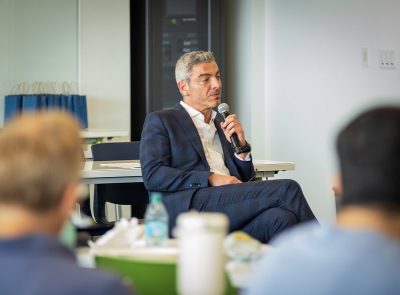 Congratulations to George Bollas who has been selected as a Fulbright Scholar Alumni Ambassador!
 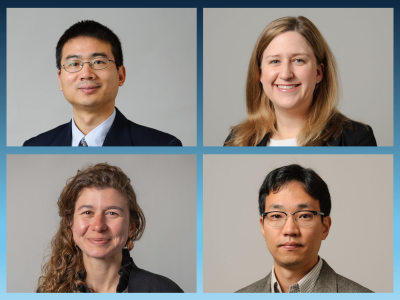 Warmest congratulations to Professors
  Congratulations to our alumni Ethan Perkins on being named a Fulbright U.S. Student Program finalist!
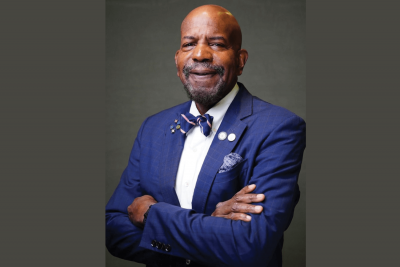 We are pleased to share that
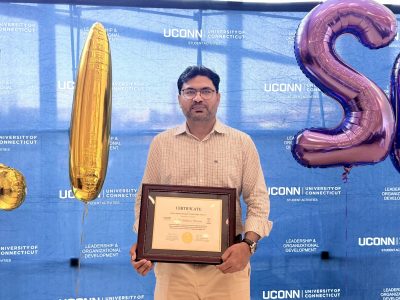 We are proud to celebrate our Ph.D. student,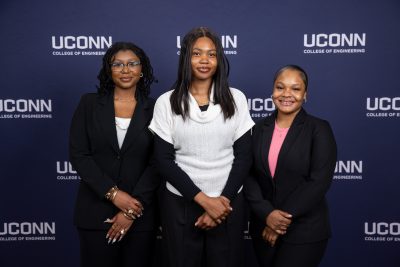
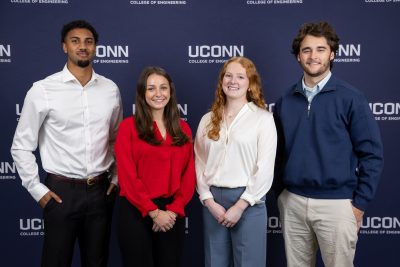
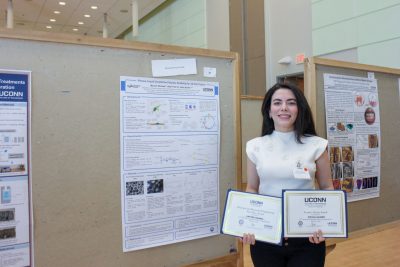 Congratulations to Maryam Mohebi on being named the departmental winner at the 12th Annual UConn College of Engineering Poster Competition.
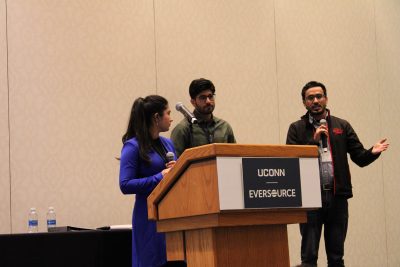 Congratulations to our PhD students,
 Warmest congratulations to our fourth-year Ph.D. candidate
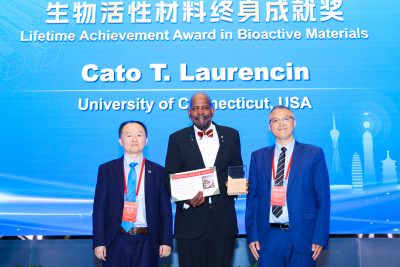 Congratulations to Sir Dr. Cato Laurencin on receiving the Bioactive Materials Lifetime Achievement Award, recognizing his pioneering contributions to biomaterials, regenerative engineering, and translational medicine.
 Congratulations to Dan Burkey and Monika Crowl on being awarded a $750K NSF grant through the Improving Undergraduate STEM Education (IUSE) program!
 Warmest congratulations to Professor
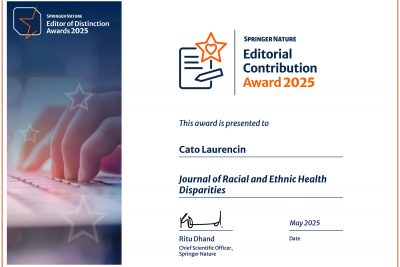 Congratulations to Professor Sir Cato T. Laurencin, MD, PhD, KCSL, on receiving the 2025 Springer Nature Editor of Distinction Award!
 Warmest congratulations to Professor Luyi Sun on being named a 2025 Board of Trustees Distinguished Professor—one of the highest honors UConn confers in recognition of sustained excellence in research, teaching, and service!
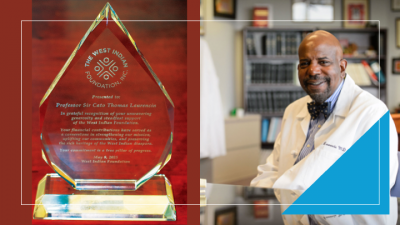 Professor Sir Cato T. Laurencin, MD, PhD, KCSL, was recently honored by the West Indian Foundation at their Board of Directors Reception for his outstanding contributions to the community!
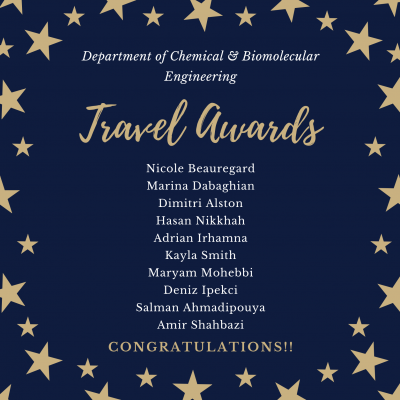 Congratulations to our graduate students who received the 2025 Travel Awards: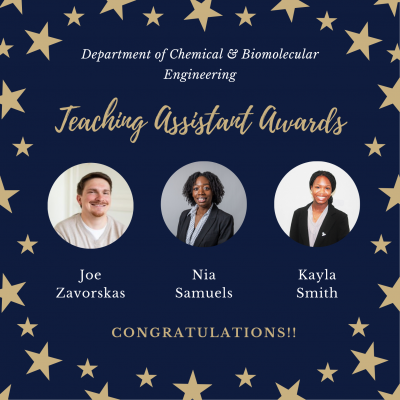
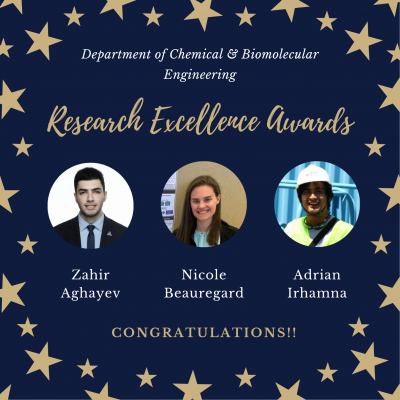 Congratulations to our outstanding graduate students who received the 2025 Research Excellence Awards:
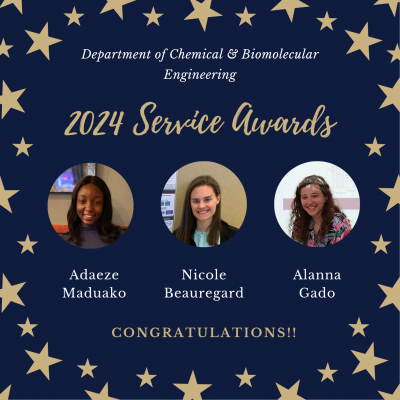 Well-deserved congratulations to our incredible graduate students who received the CBE Service Awards last year:
 Congratulations to President Radenka Maric on being named a Fellow of The Electrochemical Society (ECS)—one of the highest honors in the field of electrochemistry and solid-state science!
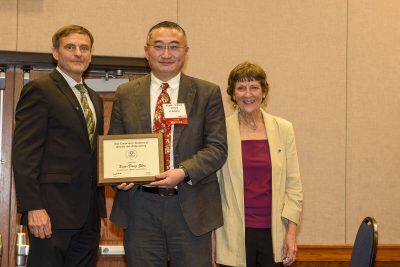 Congratulations to Professor Xiao-Dong Zhou on his election to the Connecticut Academy of Science and Engineering (CASE)—a well-deserved honor recognizing his exceptional contributions to sustainable energy research!
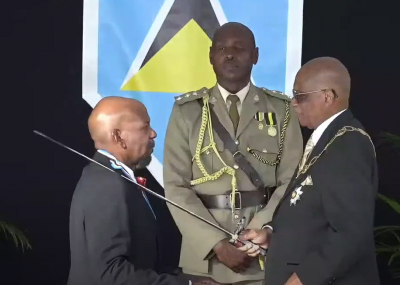 We’re thrilled to celebrate Dr. Cato T. Laurencin’s appointment as Knight Commander of the Order of St. Lucia — earning him the title Sir Cato Laurencin.
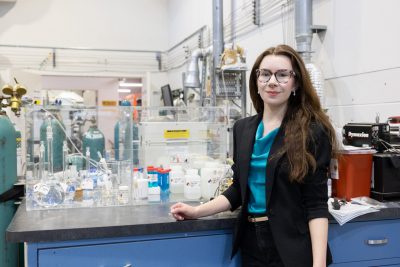 We are extremely proud of our junior, Caitlin Noonan ’26, for being named a Goldwater Scholar!
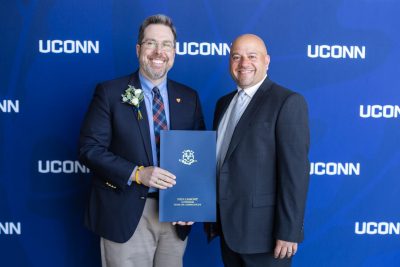 Congratulations to Professor Daniel Burkey on being recognized as the 2025 Outstanding Higher Education Professional by the UConn Neag School of Education and its Alumni Board!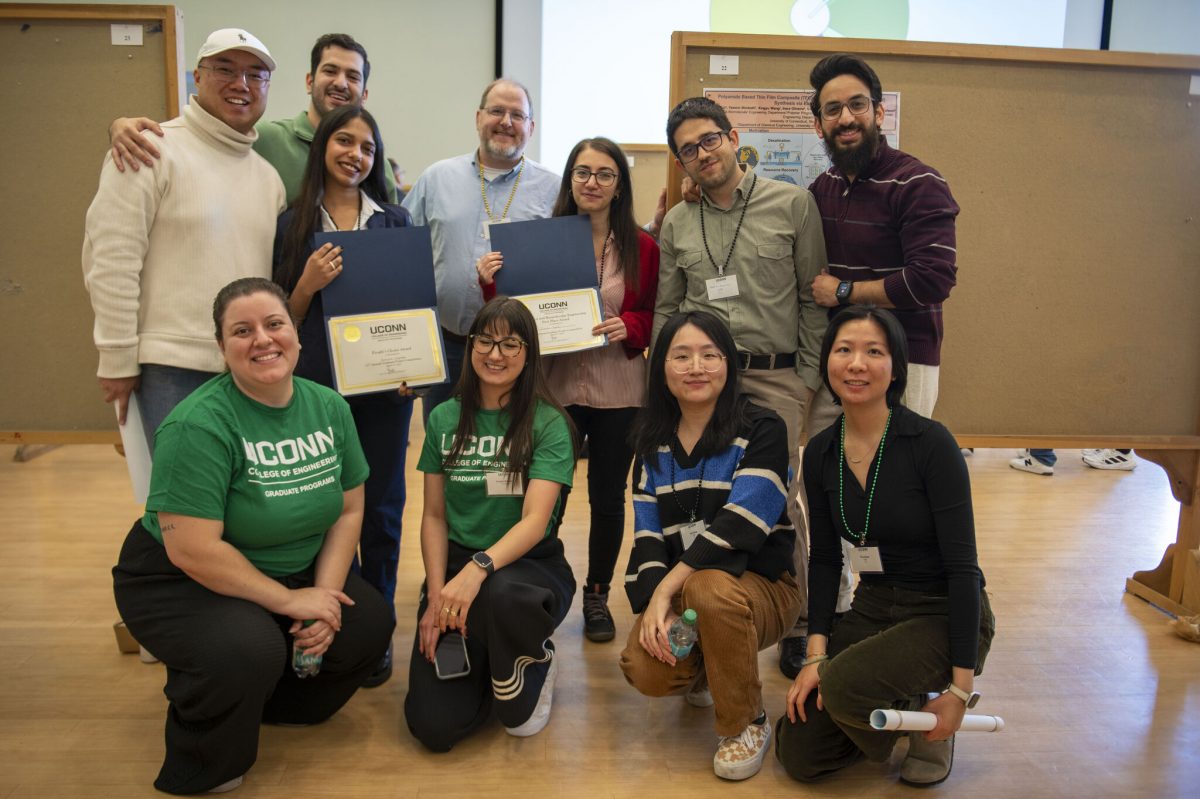
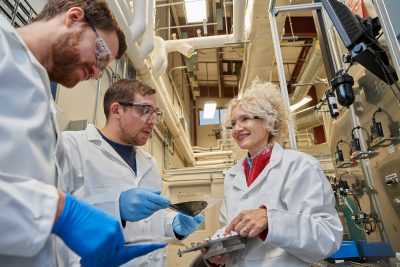 President Radenka Maric (NAI Fellow, 2019) – A leader in sustainable energy, her pioneering work in materials and catalysts has advanced fuel cell technologies, energy storage, and electrochemical sensors, enabling high-performance clean energy solutions.
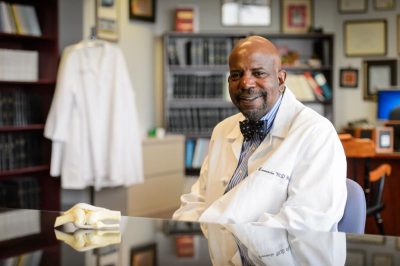 Prof. Cato Laurencin (NAI Fellow, 2013) – The first UConn faculty member to become an NAI Fellow and a trailblazer in regenerative engineering. His breakthroughs in nanotechnology, polymer chemistry, and tissue regeneration have earned him national honors, including the National Medal of Technology and Innovation.
 Prof. Luyi Sun (NAI Fellow, 2021) – An expert in polymeric materials, ceramics, and composites, his research is driving innovation in packaging, energy, and catalysis, shaping next-generation materials for diverse applications.
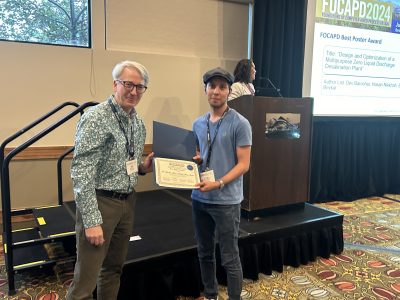 We are thrilled to share that our graduate student, Hasan Nikkhah, has received the Best Poster Award at the 2024 Foundations of Computer-Aided Process Design (FOCAPD) Conference for his work on seawater desalination. In collaboration with our undergraduate student Dev Barochia and under the guidance of Professor Burcu Beykal, Hasan presented their research, “Design and Optimization of a Multipurpose Zero Liquid Discharge Desalination Plant,” which introduces a novel approach to multicomponent seawater desalination with zero liquid discharge.
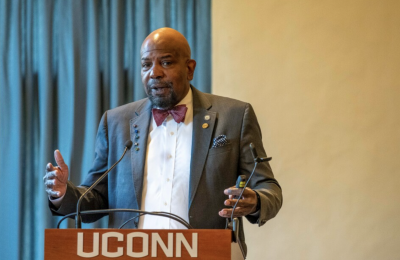 Warmest congratulations to Professor Cato Laurencin, recipient of the 2025 Paul Terasaki Innovation Award! The Paul Terasaki Innovation Award honors individuals who have made outstanding and sustained contributions to biomedical innovation, recognizing those who not only advance research but also translate their discoveries into real-world medical solutions. Dr. Laurencin embodies this mission through his pioneering work in regenerative engineering, polymer science, and musculoskeletal repair and regeneration. His groundbreaking contributions include the invention of the Laurencin-Cooper ligament for regenerating the anterior cruciate ligament (ACL) and the development of engineered grafts for rotator cuff tendon repair and regeneration. His research has bridged fundamental science with transformative medical applications, impacting countless lives.
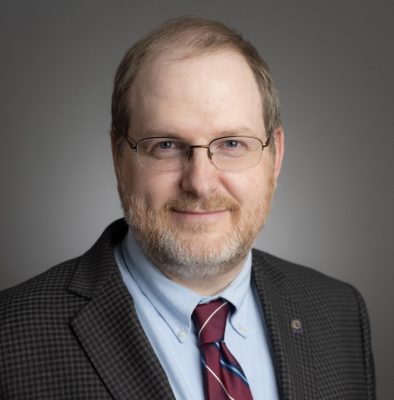 We are proud to share that Professor Jeffrey McCutcheon has been awarded the AIChE FRI/Neil Yeoman Innovation Award by the AIChE Separations Division! This prestigious award recognizes Dr. McCutcheon’s pioneering research in additive manufacturing of thin film composite membranes, a significant advancement in membrane technology that has broad implications for separations science and industry. Dr. McCutcheon presented his groundbreaking work at the AIChE Annual Meeting Separations Division Plenary session last fall.
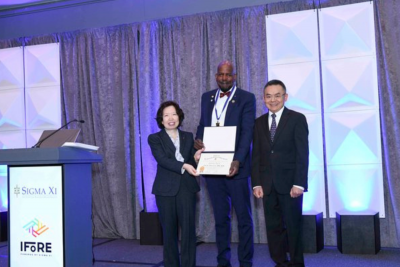 Congratulations to Professor Cato T. Laurencin on receiving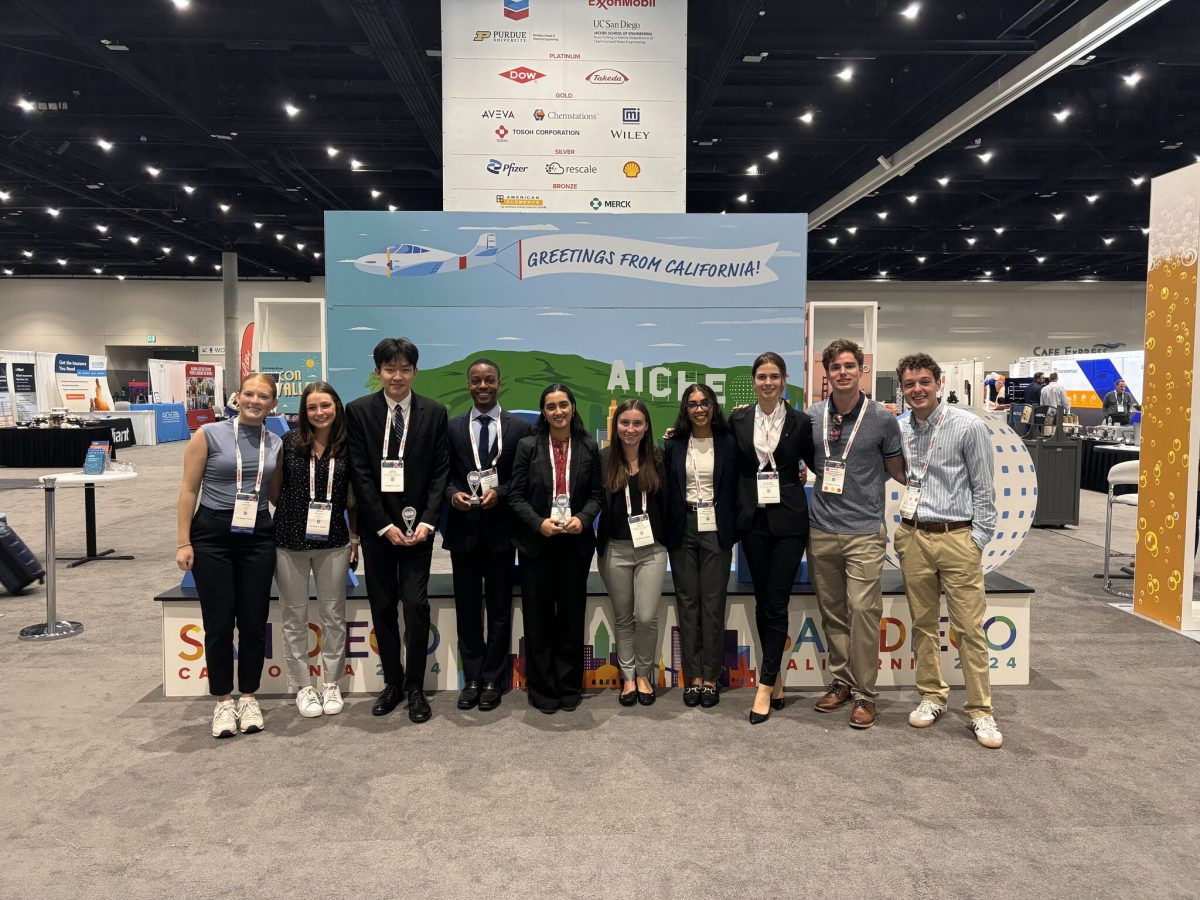
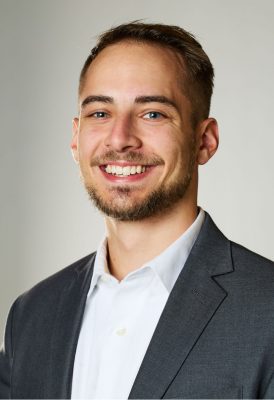 Congratulations to our graduate student Erik Ammermann for winning the Food, Pharmaceutical, and Bioengineering Division Student Oral Presentation Award at the 2024 AIChE Annual Meeting!
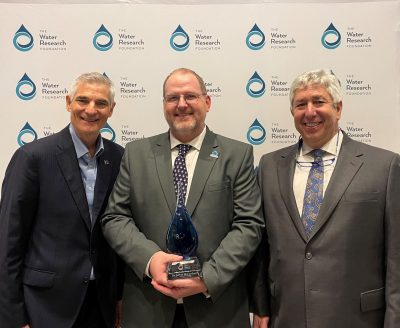 The Water Research Foundation (WRF) has honored Professor Jeff McCutcheon with its top recognition: the Paul L. Busch Award. Dr. McCutcheon and his lab have developed a groundbreaking additive manufacturing approach to produce thin-film water treatment membranes. This method, based on electrohydrodynamic spray processing, enables customization of membrane chemistry and performance—capabilities that traditional manufacturing techniques cannot achieve.
 Congratulations to Professor
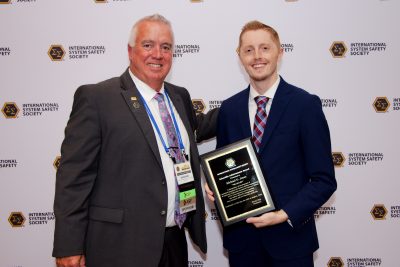 Our alumni
 We’re thrilled to announce that Dr. Yongku Cho and his collaborator Dr. Jesse Rinehart from Yale University School of Medicine have been awarded $500,000 at the Tauopathy Challenge Workshop to investigate post-translational modifications in tau protein aggregates. These chemical changes, found in patients with Progressive Supranuclear Palsy (PSP) and Frontotemporal Dementias (FTDs), may increase tau aggregation and toxicity, both of which are critical contributors to these neurodegenerative diseases.
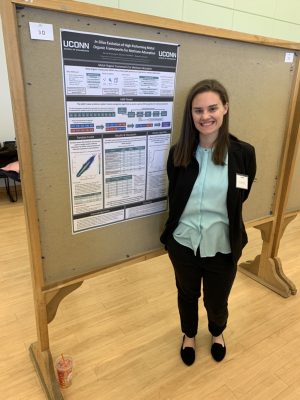 We are thrilled to announce that our graduate student, Nicole Beauregard, has been awarded the NASA Connecticut Space Grant Consortium Graduate Student Fellowship. She will be working on integrating machine learning with evolutionary algorithms for the rapid discovery of high-performing metal-organic frameworks for gas adsorption.
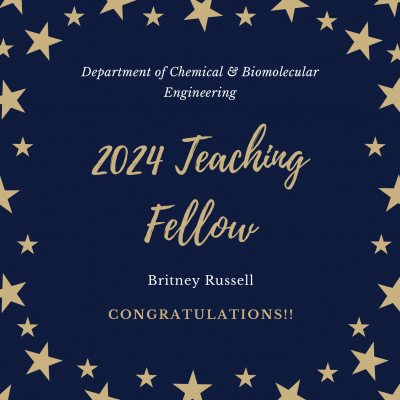 We are proud to announce Britney Russell as the 2024 Teaching Fellow of our Department!
 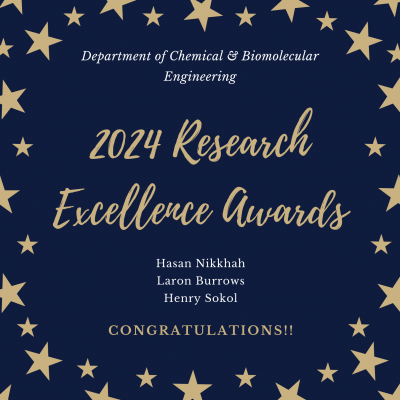 We are proud to announce Hasan Nikkhah, Laron Burrows, and Henry Sokol as the winners of the 2024 Research Excellence Awards! Their pioneering research and unwavering commitment to scientific advancement have earned them this well-deserved recognition.
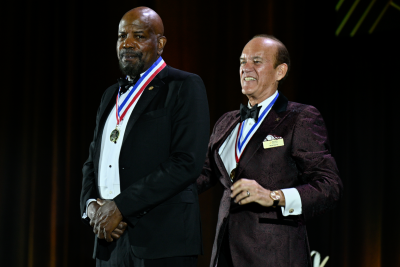 Warmest congratulations to Professor Cato Laurencin on his remarkable achievement of being inducted into the prestigious Plastics Hall of Fame. This honor recognizes his pioneering contributions to the field of regenerative engineering, where he has revolutionized the use of polymeric materials in developing cutting-edge medical devices, biologics, and pharmaceuticals. Prof. Laurencin’s groundbreaking work has transcended traditional boundaries, improving the lives of countless individuals worldwide.
 Congratulations to the recipients of the 2024 Outstanding Graduate TA Awards!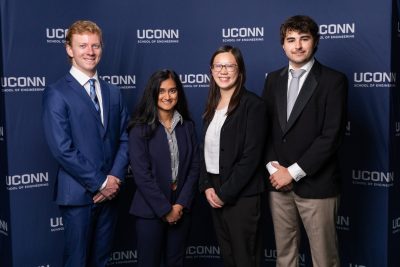
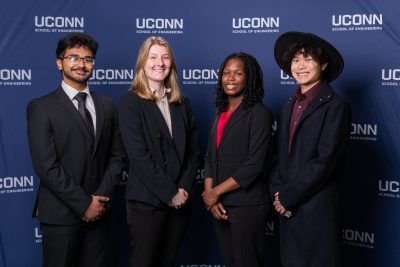
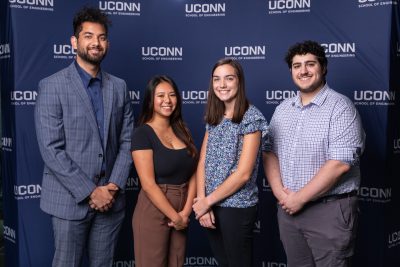
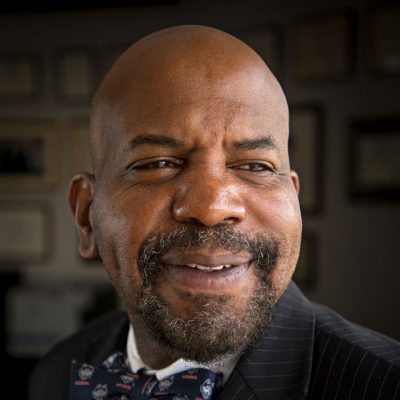 The American Chemical Society held the Kathryn C. Hach Award for Entrepreneurial Success Symposium on March 19th in honor of Dr. Cato T. Laurencin for his transformative work in regenerative engineering. The Hach Award acknowledges remarkable entrepreneurs who innovate and introduce novel products, services, companies, or industries using chemistry’s transformative potential to enhance lives and bolster economic growth.
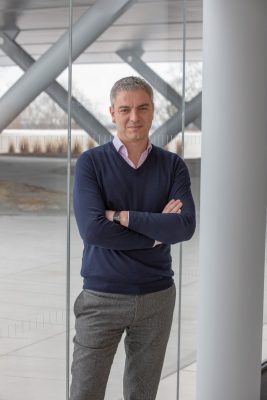 Warmest congratulations to Prof. George Bollas who has been selected for the Fulbright U.S. Scholar Award for 2024-2025. The Fulbright Program is devoted to increasing mutual understanding between the people of the United States and the people of other countries. The Fulbright Association is the world’s largest and most diverse international educational exchange program. The presidentially appointed 12-member Board of the Fulbright U.S. Scholar program is responsible for supervising the Fulbright Program worldwide and approving the selection of all Fulbright recipients.
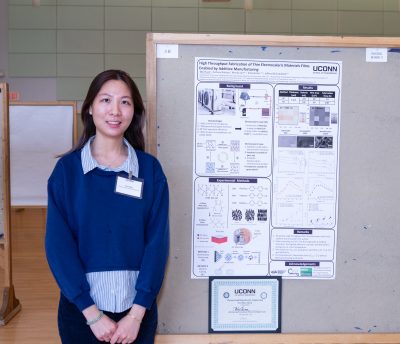 Warmest congratulations to Wei Ruan who won the 1st place Award in Chemical & Biomolecular Engineering and the 3rd place award at the College of Engineering with her work on “High Throughput Fabrication of Thin Electrocaloric Materials Films Enabled by Additive Manufacturing” at the 10th Annual College of Engineering Poster Competition.
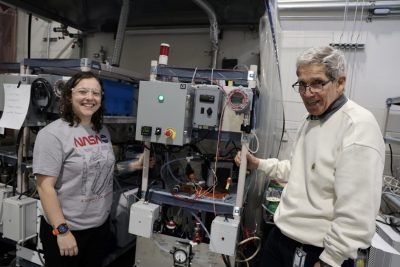 Warmest congratulations to Alanna Gado for being awarded the Graduate Research Fellowship sponsored by the NASA Connecticut Space Grant Consortium. Her work focuses on developing advanced catalyst-coated membranes for achieving high efficiency and high durability proton exchange membrane water electrolyzers under the advising of Professor Radenka Maric and in collaboration with Research Scientist Leonard Bonville and Associate Research Professor Stoyan Bliznakov. This research holds immense promise for the field of hydrogen production and clean energy technology, paving the way for sustainable solutions to our energy challenges.
 In a groundbreaking achievement, Dr. Cato Laurencin has been named the Inventor of the Year by the Intellectual Property Owners Education Foundation, an accolade that recognizes the world’s most outstanding recent inventors and their profound impact on the nation’s economy and quality of life. Dr. Laurencin’s pioneering work in the field of Regenerative Engineering has resulted in revolutionary technology that promotes bone and tissue regeneration, ultimately enhancing the quality of life for patients. This prestigious recognition underscores the transformative impact of his contributions in the realm of healthcare and regenerative medicine. His innovative work continues to be a beacon of hope for patients worldwide, marking a significant milestone in the field and solidifying his position as a trailblazer in healthcare innovation.
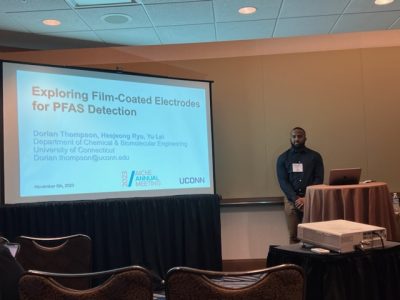 Warmest congratulations to Dorian Thompson for an outstanding achievement—securing the 3rd place in the Graduate Student Competition in Sensors at the AIChE Annual Meeting! Dorian works on PFAS detection under the advising of Professor Yu Lei.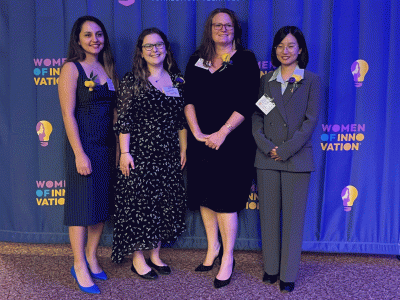
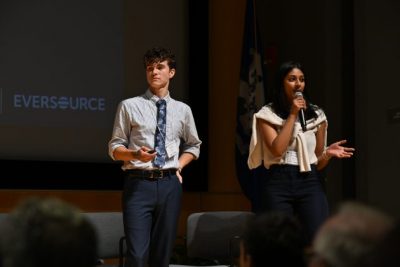
 Warmest congratulations to Dr.
  Warmest congratulations to Dr. Cato T. Laurencin, the recipient of the 2024 Kathryn C. Hach Award for Entrepreneurial Success
 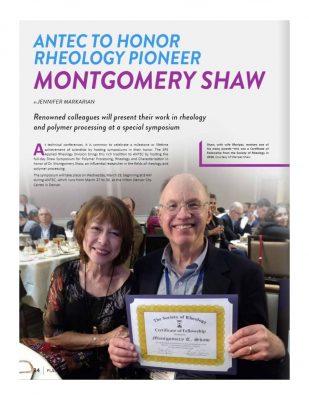 Honoring the work of our Emeritus Professor, Dr. Montgomery Shaw, the SPE Applied Rheology Division recently hosted the full-day Shaw Symposium for Polymer Processing, Rheology, and Characterization. The event brought together renowned colleagues who presented their work in rheology and polymer processing at a special symposium, celebrating Dr. Shaw’s many contributions to the field. As a pioneer in rheology, Dr. Shaw is an influential researcher whose work helped shape the field of polymer processing.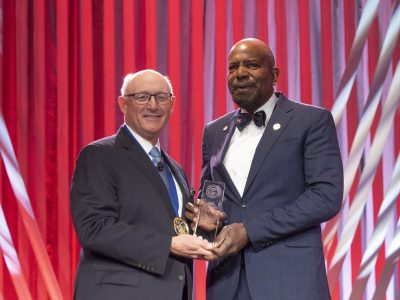
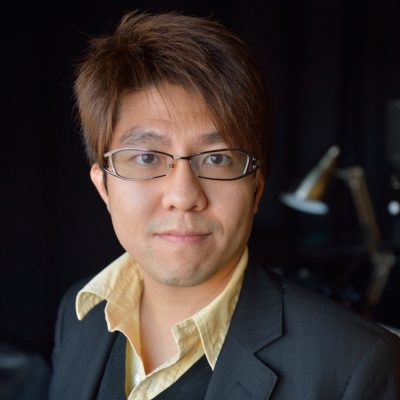
 Kristina Wagstrom, Eversource Energy Assistant Professor of Environmental Engineering Education at the University of Connecticut, received a CAREER Award from the National Science Foundation for a project that will evaluate air pollution in various neighborhoods in Hartford.


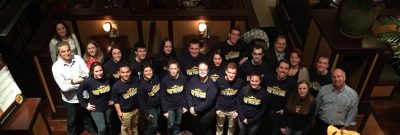

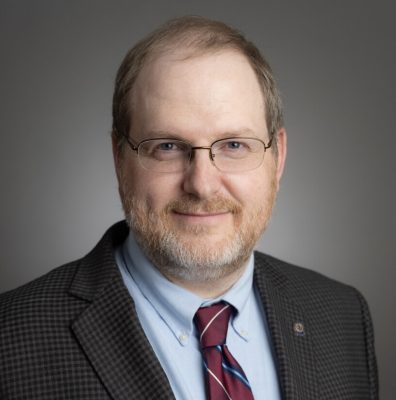
 Dr. Yongku Cho, Assistant Professor in the Department of Chemical and Biomolecular Engineering, has received a prestigious and highly competitive
 Chemical Engineering junior Ari Fischer has been named a
  Dr.
Dr.  Perhaps the most exciting aspect of this process is that it is able to operate at or near room temperature (20-50°C), which has a number of advantages. “There will be lower energy required for the process, and much lower cost because you do not need high quality heat and you have a wider range of materials that you can consider,” said Dr. Mustain. He hopes to leverage all of the work that has been done on other electrochemical devices, like batteries and fuel cells, over the last 20 years to make rapid improvements on his prototype.
 During a gala event on May 2 at the Storrs campus, the School of Engineering honored 10 exceptional alumni and friends as 2013 inductees into the UConn Academy of Distinguished Engineers. Nearly 100 attendees helped to honor the new inductees, each of whom spoke of the profound influence of UConn Engineering in shaping their careers. One inductee was an alumnus of the Chemical Engineering department, John Prior.


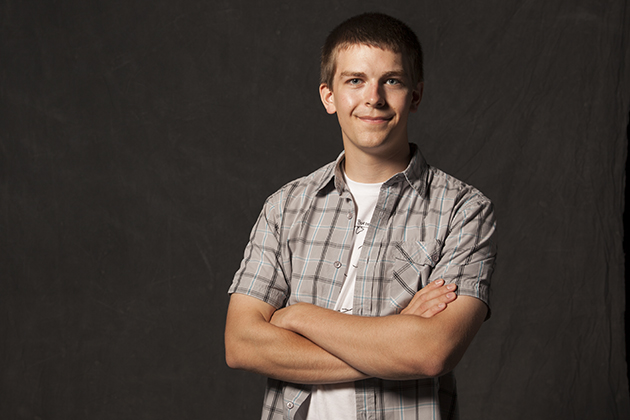
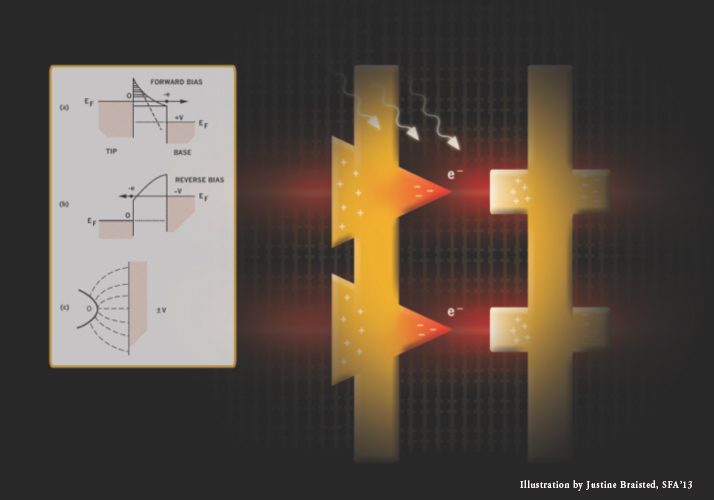
 Wenzhao Jia receives Engineering Outstanding Senior Women Award. Wenzhao has proved to be an outstanding student with a distinguished academic background and exceptional research abilities. Her doctoral research concentrates on the preparation, characterization and sensing application of novel nanostructured functional materials.


