 Consider the complexity of a modern passenger airliner. An aircraft is a self-contained “system-of-systems,” consisting of a diverse assortment of interdependent subsystems and components working together. Electrical, hydraulic, flight control, fuel handling, cabin pressurization, and engine systems are all crucial parts of a functional aircraft, each with their own constraints and requirements in addition to those of the aircraft as a whole.
The complexity of engineering interconnected systems like aircrafts — or, for that matter, power plants, smart buildings, and modern manufacturing facilities — has led many industries to migrate toward formalized systems engineering, considering large systems holistically.
Led by George Bollas, the United Technologies Corporation Institute for Advanced Systems Engineering (UTC-IASE) has been solving these real-world problems for industry since 2013.
Bollas, who is a professor of chemical and biomolecular engineering in UConn’s School of Engineering, focuses his research on process design, simulation, optimization, control, and diagnostics. These research interests align seamlessly with the needs of industry partners like United Technologies Corporation.
Located in the University of Connecticut Tech Park’s Innovation Partnership Building, UTC-IASE is working on some of the most pressing challenges for businesses and research sponsors using innovative approaches to model-based systems engineering.
“We have converted it to something that is self-sustained and can work with United Technologies at many levels, but also engage other satellite industry partners, the state, and federal agencies to have a greater impact,” says Bollas.
Location, Location, Location
At UConn Tech Park, students from different departments and research groups in the School of Engineering who are working on different projects managed by the UTC-IASE can come together in a central location. Much like the complex operations the students are researching, their individual projects and skills all work together to make systems more efficient. Bollas says this allows for close collaboration and frequent discussion of what each individual group is tackling.
“For the first time we’re all in one place,” Bollas says. “To develop that culture for students, where they work next to each other, day and night, and all that good competition that comes out of it is very positive for the mindset and culture both at UConn and when these students go out in the workforce.”
“Industry often focuses on measurable outcomes, seeking means for producing their products better, faster, and at reduced cost. Awareness of these tangible impacts helps students understand the importance of their research”, says Bollas.
“In many cases, you know from the get-go that you are going to help a company solve a $10 million-a-year problem. It’s very exciting for the students to work on something that they understand has immediate value and impact on such a huge scale,” Bollas says.
Many of the students at the UTC-IASE go into careers with United Technology Corporation or other companies in the area of manufacturing, energy, aerospace, building, and robotics. The experience contributes to the preparation of graduate and undergraduate students for these careers as they learn to communicate with industry partners effectively and consistently.
“It’s a natural next step,” Bollas says. “It’s very helpful to know where they might be going, what they’re going to face in industry or academia.”
In addition to graduate research, UTC-IASE exposes UConn students to business professionals through a training program that was originally designed for employees of the corporation. Bollas says this training is critical, since the entire concept of systems engineering works to un-train students from thinking about problems in terms of their own specificity.
“In both research and training, we emphasize the concept of system-level thinking. One needs to understand what the entire system looks like – from architecture to requirements, design, commissioning, performance, and maintenance. This approach relies on thinking of the entire life-cycle of a system from design to decommissioning.”
To accomplish this, UTC-IASE offers training of professionals through a formal Graduate Certificate and a Master of Engineering program in Advanced Systems Engineering. These programs are offered to geographically dispersed professionals as well as students at UConn who are interested in developing a unique and valuable set of skills in the areas of model-based systems engineering of cyber-physical systems.
“We’re helping lifelong learning for the existing engineering workforce,” Bollas says. “We’re helping them understand what is the state-of-the-art, and some of the approaches and solutions to the problems they are dealing with in their everyday work. We call this integration of undergraduates, graduate students, and professional engineers a ‘talent eco-system’ that can produce and sustain a modern engineering workforce in the state and for the nation.”
Big Problems, Real Solutions
Bollas is currently collaborating with Collins Aerospace to improve fault detection and isolation methods. The advanced detection algorithms Bollas and his research team are developing are optimized for actively identifying faults during aircraft operation and helping to reduce false alarms. This project has already led to two patent applications filed jointly by UConn and Collins Aerospace.
“We’re transferring what we develop here at the university to actual industry environments, where we have access to all the data, constraints, requirements, and system-specific details. We do this through internships and sabbatical leaves, and this has really been a wonderful model for technology transfer,” Bollas says. “I’m not sure we’d be aware of the significance and limitations of our research if we weren’t working with a technology leader like UTC.”
Bollas again points to the importance of location, both in Connecticut and at Tech Park, to help the institute grow.
“There are so many opportunities generated for the institute just because we are located here,” Bollas says. “We’re working with several other Tech Park centers and their industry partners since they are more and more focused on ‘smart’ processes for manufacturing.”
Bollas is referring to a paradigm shift dubbed Industry 4.0 or “smart manufacturing,” which places emphasis on cyber-physical systems. Cyber-physical systems include physical machines controlled by computer-based algorithms that are deeply ingrained in the so-called Internet of Things. To remain competitive, companies like Collins Aerospace and Pratt & Whitney have been investing in the development of smart manufacturing technologies in their respective industries.
By having access to test beds at the Connecticut Center for Advanced Technology and the Pratt & Whitney Additive Manufacturing Center in the IPB, the UTC-IASE researchers working on smart manufacturing projects with the Department of Energy provide a better picture of how well their research, algorithms, and solutions will work when used in an industrial setting.
“Smart manufacturing solutions are sometimes easy on a computer, but when you actually have to deploy these advanced technologies, it’s very helpful to have test beds we can use right here at the Tech Park,” Bollas says.
Bollas says he is proud of laying a strong foundation for future growth through partnerships with industry and federal agencies on such a large scale. Moving forward, he has no doubt that the research collaborations taking place at UTC-IASE will continue to generate innovative, real-world solutions that help Connecticut and its industry partners grow.
October 2, 2019 – Anna Zarra Aldrich ’20 (CLAS), Office of the Vice President for Research
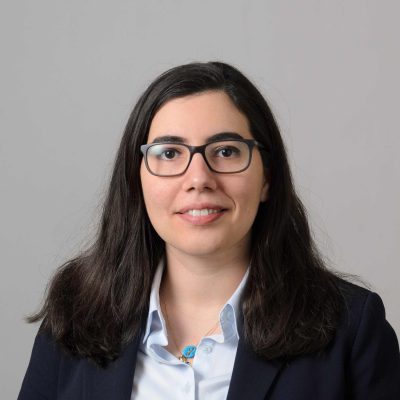 The Chemical & Biomolecular Engineering Department would like to congratulate CBE faculty member, Dr. Burcu Beykal on being invited to give a keynote speech at the Foundations of Computer Aided Process Design (FOCAPD) 2024 conference, which is one of the leading conference series in the field of chemical process design.
 Chemical & Biomolecular Engineering students, Hasan Nikkhah and Dev Barochia, in collaboration with Francesco Rouhana from UConn Civil and Environmental Engineering, have been selected as finalists in the Clean Energy & Sustainability Innovation Program. Their project, “Social and technical remedies for sustainable UConn using renewable energy sources”, has set them apart as true champions of change!
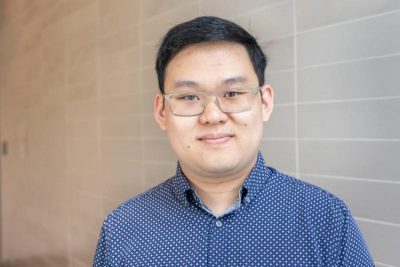 As a McNair Scholar and Honors Chemical Engineering student, Shihao Zhai has exemplified the highest standards of scholarship and commitment to the field. Throughout his undergraduate years, Shihao’s contributions to our department and the broader community have been invaluable. As he embarks on the next phase of his career, we wish him continued success, growth, and fulfillment.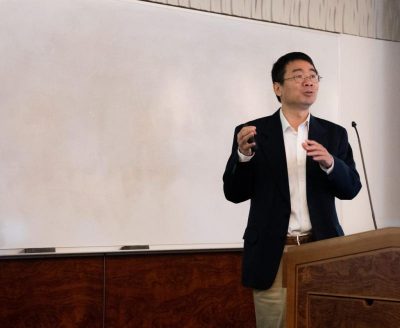
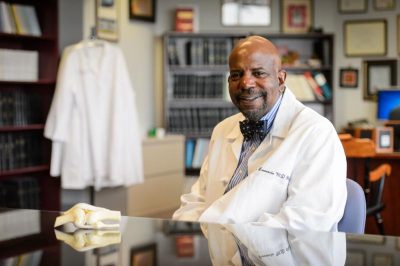 World-renowned surgeon and scientist, Dr. Cato Laurencin, has founded a new startup to help humans regrow limbs. With over 30 years of experience in the field of regenerative engineering, Dr. Laurencin is leading the charge in developing cutting-edge technologies to restore lost limbs and enhance the body’s natural healing abilities. We are thrilled to see such groundbreaking research taking place right here in the UConn Chemical & Biomolecular Engineering Department!
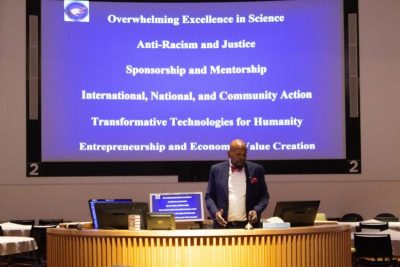 The University of Connecticut has established The Cato T. Laurencin Institute for Regenerative Engineering, a new cross-campus institute focused on innovative approaches in medicine, science, engineering, and technology. We are thrilled that this new institute is named in honor of Cato T. Laurnecin, our distinguished professor in the Department of Chemical & Biomolecular Engineering and a leading figure in the field of regnerative engineering. Congratulations to Professor Laurnecin on this exciting new venture!
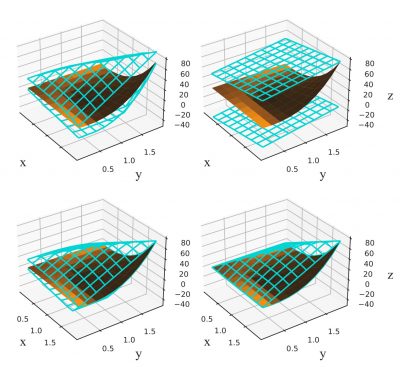 Professor Matthew Stuber, PhD and Dr. Matthew Wilhelm’s most recent publication presents new and improved methods for generating convex and concave relaxations of composite bilinear forms. They establish the theoretical framework to generate tighter McCormick-based relaxations in reduced space when intermediate bilinear terms have known convex or concave relaxations. These developments translate into significant speedups when solving deterministic global optimization problems involving these ubiquitous mathematical terms.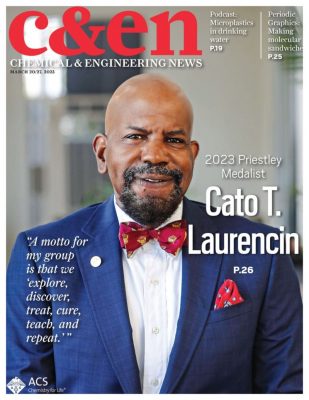
 A new center composed of interdisciplinary researchers, including our faculty members Yu Lei and Matthew Stuber, has been established to address the industry’s need for reliable soil sensors. The center will focus on developing innovative solutions for measuring soil properties using hydrogels, and it is sponsored by the National Science Foundation’s Industry-University Cooperative Research Centers (IUCRC) Program. This research will support the development of precision agriculture, an approach that focuses on applying fertilizers or pesticides only in the areas needed, decreasing the accumulation of dangerous chemicals, promoting plant health, and helping farmers save money.
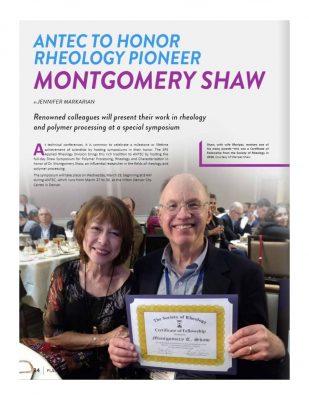 Honoring the work of our Emeritus Professor, Dr. Montgomery Shaw, the SPE Applied Rheology Division recently hosted the full-day Shaw Symposium for Polymer Processing, Rheology, and Characterization. The event brought together renowned colleagues who presented their work in rheology and polymer processing at a special symposium, celebrating Dr. Shaw’s many contributions to the field. As a pioneer in rheology, Dr. Shaw is an influential researcher whose work helped shape the field of polymer processing.

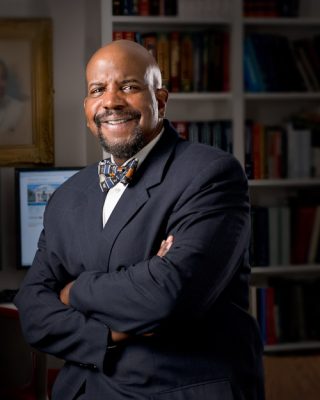
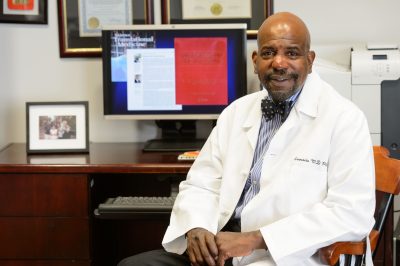 The Chemical & Biomolecular Engineering Department would like to congratulate Dr. Cato Laurencin on being elected to the European Academy of Sciences (EURASC)!
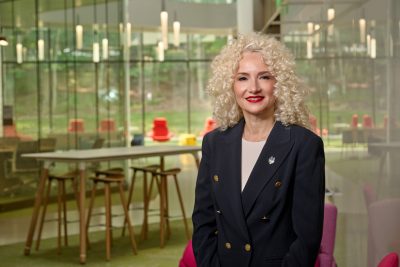
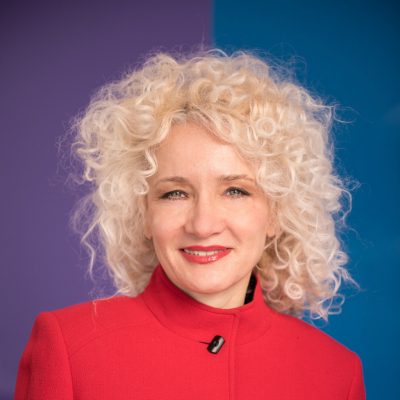 The Chemical & Biomolecular Engineering Department would like to congratulate Dr. Radenka Maric on being recognized as a Board of Trustees Distinguished Professor.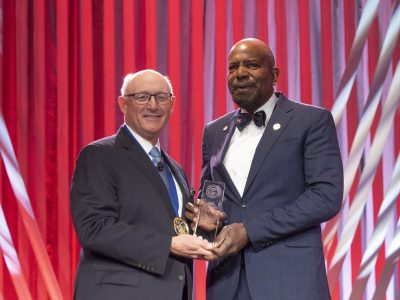
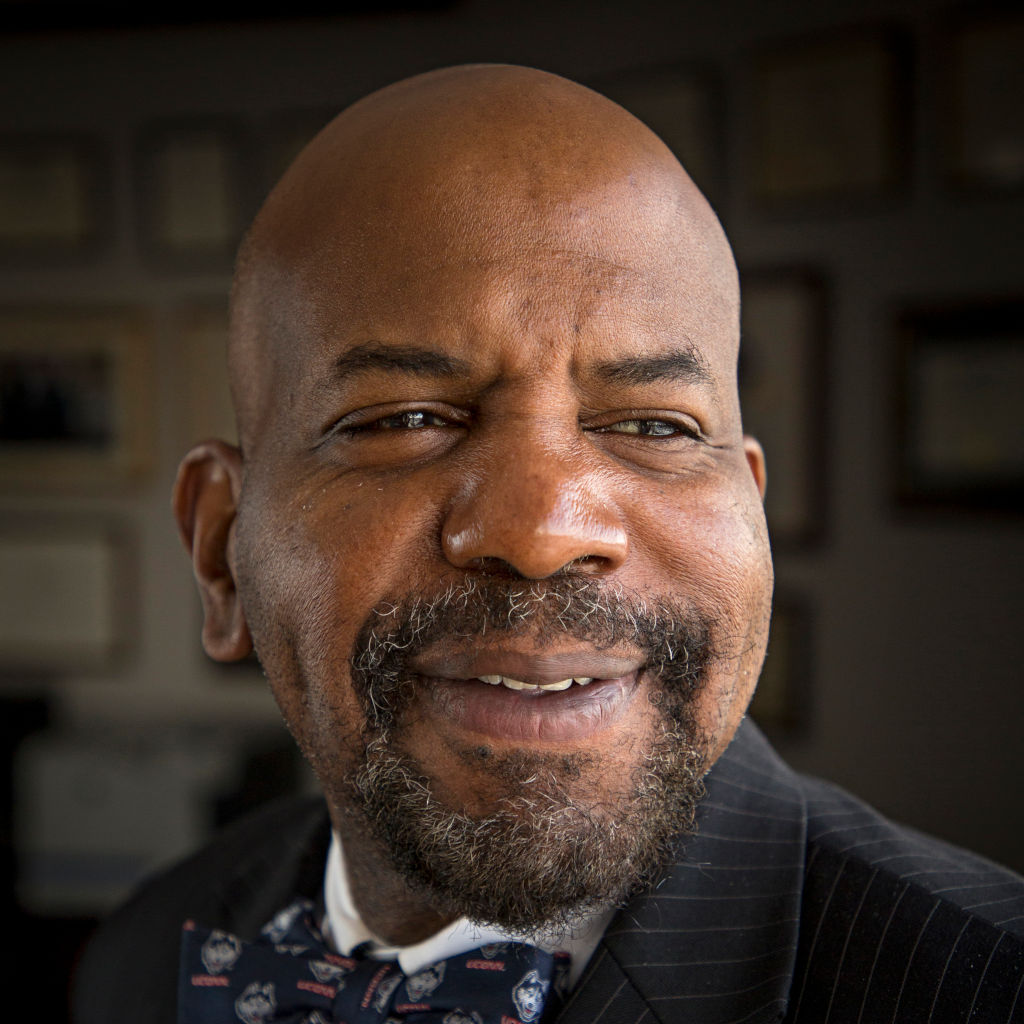
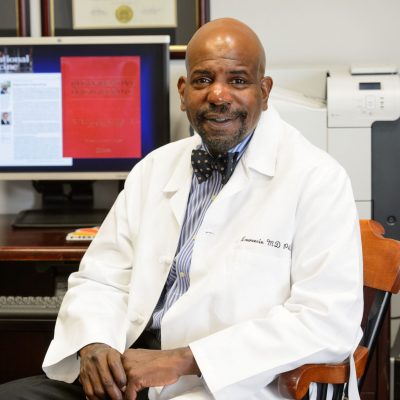 The CBE Department would like to congratulate Dr. Cato Laurencin on being named the 2021 recipient of the Spingarn Medal through the National Association for the Advancement of Colored People (NAACP)! For more information on this award and Dr. Laurencin’s achievements leading up to it, please