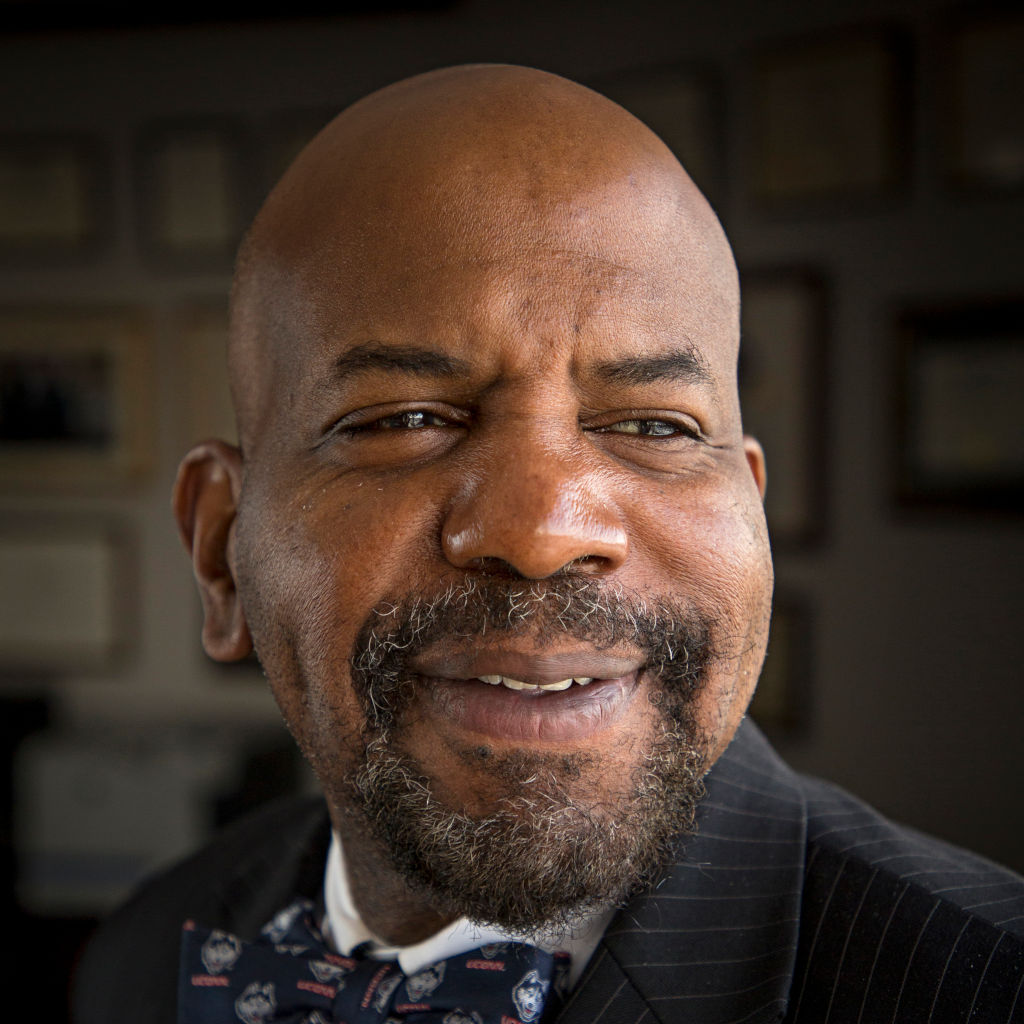
Congratulations to Dr. Cato Laurencin on receiving the NAACP top honor! To read more about the Spingarn medal, the medal reception, and Dr. Laurencin's accomplishments, please click here.
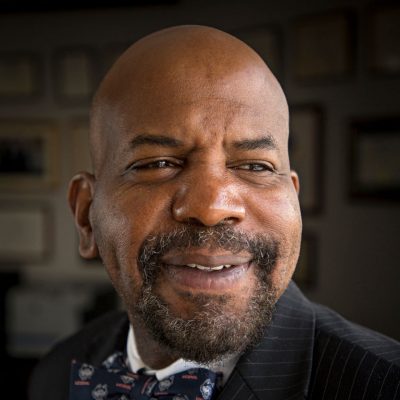
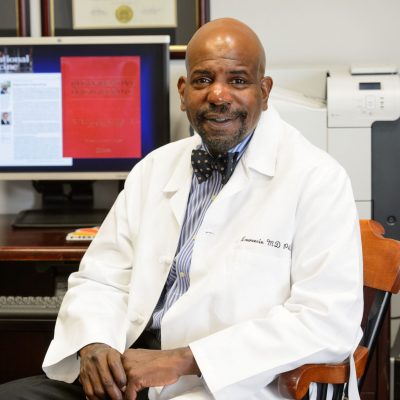 The CBE Department would like to congratulate Dr. Cato Laurencin on being named the 2021 recipient of the Spingarn Medal through the National Association for the Advancement of Colored People (NAACP)! For more information on this award and Dr. Laurencin’s achievements leading up to it, please click here.

The Chemical and Biomolecular Engineering Department would like to congratulate Professor Anson Ma on receiving this prestigious fellowship. More information regarding this fellowship and how it relates to his research can be found here.
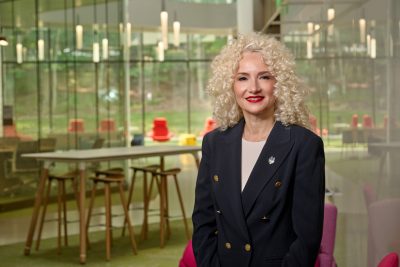
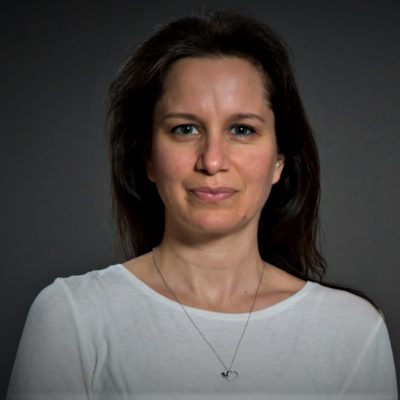
Julia Valla, Assistant Professor at the Chemical and Biomolecular Environmental Department of the University of Connecticut received a CAREER Award from the National Science Foundation to research the removal of sulfur molecules from transportation fuels. The award for $500,000 will revolutionize sulfur removal using adsorption in ion exchanged zeolites.
Valla began working on sulfur removal as a Ph.D student. By the end of the five years of her CAREER project, Valla aims to develop novel filters that can efficiently and economically remove the sulfur molecules from fuels.
“The CAREER award was very important for me because I can continue research what I started 18 years ago. It is important that I can evolve on findings that I have already created,” Valla said.
She explained that sulfur molecules found in transportation fuel are toxic. They have adverse effects on the environment and subsequently on humans. Sulfur oxides which can be emitted from cars can cause acid rain, which causes environmental pollution.
“The reason why I keep pushing this effort is because the sulfur molecules, this impurity has very detrimental effects on the environment and consequently on humans, and on our lives,” Valla said, “The fossil fuels, whether we like it or not, is still our main source of energy. We do need to, of course, be looking to renewable energy resources and put our efforts into research on renewable energy. However, it’s also important to do something about the fossil fuels that we use now.”
Currently, sulfur is removed from fuels in a process called hydrodesulfurization in the refinery. Valla said the process requires severe conditions and the use of hydrogen makes it an expensive process. Her research will focus on utilizing ion-exchanged zeolites, specifically zeolite Y, which is a porous mineral. The zeolites will be tested for their selectivity in binding to sulfur and not to other molecules in the fuel, and how well they adsorb the sulfur to reach the mandatory government standards.
The zeolites can be regenerated and reused, which makes them a more affordable alternative to hydrodesulfurization.
“The major challenge is to create a sorbent that has high selectivity in sulfur molecules, meaning that it will adsorb the sulfur molecules, leaving the other molecules in the fuel intact, ” Valla said.
This project will be an iterative process that uses experiments and models to “create fundamental knowledge on how the properties of metals and bimetals-exchanged Y zeolites, such as pore size, metals properties, location, oxidation state and interaction, affect the adsorption process.”
Valla will be working to optimize a zeolite so that it can be extremely selective in finding sulfur molecules and then adsorb them.
She explained that this research can lead to a product that can have significant impact on the environment and consequently humans.
“As the regulations become more strict, the refineries need to use more severe and expensive conditions in the hydrodesulfurization process, so if we find something now that’s more economical and visible that will save us a lot of lives, and environmental problems,” Valla said.
Written by: By Sarah Al-Arshani
Photography by: Thomas Hurlbut
 Kristina Wagstrom, Eversource Energy Assistant Professor of Environmental Engineering Education at the University of Connecticut, received a CAREER Award from the National Science Foundation for a project that will evaluate air pollution in various neighborhoods in Hartford.
The five year, $500,000 project entitled “Engaging Communities to Bridge the Local to Regional Gap in Air Pollution Exposure Assessment” began in June 2018. Wagstrom and students in one of her service learning elective courses will be working with various neighborhoods in Hartford to tackle issues of near road air pollution. They will develop recommendations for individuals, communities, and policy changes to mitigate the impact of air pollution.
“The motivation behind this project is to provide ways to better understand real world air pollution exposures and take into account near road exposures,” She said.
One part of the project will involve monitoring air pollution in Hartford using low cost equipment. Wagstrom said that for every year of the project researchers will partner with different neighborhood associations in Hartford to do modelling and monitoring of air pollution in that neighborhood. Citizen will able to set up some monitors themselves as well.
Wagstrom said the project will focus on using a hybrid modeling approach that will yield better estimates of air pollutant concentrations than other models.
“A lot of the actual effort on the project is developing this complex new model,” Wagstrom said “The goal is to provide a tool that can be used anywhere to provide better air pollution estimates that can then be used to make recommendations to people about how they might want to change their own activity and make recommendations to communities and city planners about better ways of planning urban areas.”
She said the new modeling system will allow them to better estimate, for example, the difference between walking or biking down one road versus another during different times of day.
“So really giving us much better estimates to what your air pollution exposure would look like given different activity patterns. Different ways of going about your life day to day,” Wagstrom said.
Article by Sarah Al-Arshani
Photography by Peter Morenus
Dr. Xiaoguang Peng – a postdoctoral research associate from Dr. Anson Ma’s research group – has received a prestigious fellowship from Anton Paar in recognition of his expertise in rheology and contributions to the science of complex fluids. Dr. Peng received his PhD degree in Chemical Engineering from Texas Tech University in 2016. Before joining UCONN in 2018, he was a PhD student and then a postdoctoral fellow in Prof. Greg McKenna’s group at Texas Tech. He has over 10 years of experience in the synthesis and characterization of polymers and colloidal dispersions.
The Anton Paar fellowship was established in 2016 as part of a strategic partnership between Ma’s research group and Anton Paar – a world-leading manufacturer of measurement instruments. The company has provided fellowships and loaned their most advanced rheometer, the MCR 702 TwinDrive Rheometer, to Dr. Ma’s lab. https://news.engr.uconn.edu/new-partnership-brings-high-end-research-equipment-to-uconn.php

Professor Yu Lei, Chemical and Biomelcular Engineering, has been chosen for appointment to a Centennial Term Professorship in the School of Engineering. The Centennial Term Professorships, established through an anonymous donation of $1 million, are aimed at recognizing outstanding faculty members who have left a lasting impact on the School of Engineering through leadership and innovation in teaching, research, mentorship, engagement, and institution building.
Dr. Lei received his Ph.D. in 2004 from the University of California-Riverside. He joined UConn’s Chemical and Biomolecular Engineering in 2006. Dr. Lei is a well-acknowledged expert in the areas of chemical and biological sensors. The primary area of Professor Lei’s research is to develop novel, simple, cost-effective, ultrasensitive, and universal (bio)sensor and/or nanomaterial-based sensor platforms for the detection of biological and chemical species, which combine the principles of chemical engineering, nanotechnology and molecular biology for homeland security, environmental, energy and biomedical monitoring.
Dr. Lei is an elected Fellow of American Institute of Medical and Biological Engineering (AIMBE) and an elected member of the Connecticut Academy of Science and Engineering (CASE). He is a licensed Professional Engineer (P.E.) in Chemical Engineering and was a recipient of UConn School of Engineering Dean’s Excellence Award in 2016. Dr. Lei has over 140 peer-reviewed journal publications, 3 invited book chapters, and more than 10 patents/disclosures.